by Oliver Nathan

“It’s like living in the apartheid era. We don’t exist,” said Nonthunzi Nodliwa, 46. Nodliwe lives in Khayelitsha’s TR Section, where disillusionment with service delivery runs high [ from: http://antieviction.org.za ]
Introduction
South Africa is an extremely unequal society. The post-apartheid dispensation has seen the situation of the majority poor black working class worsening (characterised by increasing unemployment, a lack of adequate and affordable service delivery and exacerbated by rampant inflation). On the other side of the coin, a few elites have ‘made it’ in capitalism and through the state, often through the elitist forms of ‘Broad Based Black Economic Empowerment (BBBEE)’ and corruption. Inequality in South Africa is easily illustrated when one observes the massive disparities in development, service delivery and wealth between townships and rural areas on the one hand, and suburban areas on the other.
Nationally, South Africa faces a massive backlog in service delivery. Some 203 out of 284 South African municipalities are unable to provide sanitation to 40% of their residents. This means that in 71% of municipal areas, most people do not have flush toilets. A staggering 887 329 people still use the bucket system and 5 million people, or 10.5% of the population, have no access to sanitation at all.[1] It is perfectly understandable, then, why working class and poor people take to the streets in protest against poor and costly service delivery; it is these same people that are impacted most by insufficient and costly service delivery, corruption and municipal mismanagement.
Continue reading →
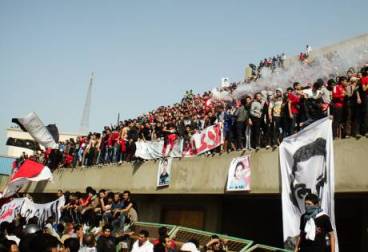 An unprecedented situation is taking place in the city of Port Said – complete self-management, a rejection of everything that authority represents. It is a situation that the main actors in the Egyptian struggle at this time – the workers – are trying to reproduce in other cities too.

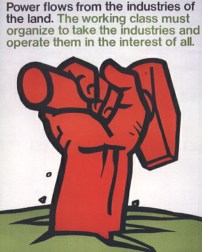 Movements for ecological awareness and protection, such as those against climate change, are making important contributions to social understanding regarding the effects of industrial production and consumption. However, many arguments and analyses against ecological destruction and for environmental protection are seemingly not based on a class analysis and not informed by the lives of working class people. Thus many of these analyses do not question the systems of domination that lie at the root of social inequality and ecological devastation: capitalism and the nation state.
 The son of a Wesleyan minister, Thibedi William Thibedi was one of the most important black African revolutionary syndicalists in South African history. Thibedi was a leading figure in the International Socialist League (ISL) and in the Industrial Workers of Africa syndicalist union. Later he played an important role in the early Communist Party of South Africa (CPSA), particularly its union work. He was active in all of the key black unions from the 1910s to the 1940s.
 Published in 2011 by Pambazuka Press, My Dream is to be Bold: Our Work to End Patriarchy is the welcome result of the work of Feminist Alternatives (FemAL), “a group of feminist activists in South Africa working against sexism and oppression”. The book provides insight into the lives, struggles and ideas of nineteen feminist activists based in South Africa, who organised “to come together over two days and reflect on women’s organising in the context of a patriarchal, neoliberal social and world order”. The book itself is a collection of writings by the nineteen activists, developed during a publication workshop held in Cape Town in June of 2009. The workshop, organised by FemAL, sought “to build collective analysis through speaking to other women, comparing experience, collectively trying to understand that experience and theorise it”.
 Beginning in December 2010, a series of uprisings in Arab countries brought hope to workers and the poor – not only in the Middle East but throughout the world. Dictators have been toppled in Tunisia, Egypt and Libya, and struggles continue throughout the region.
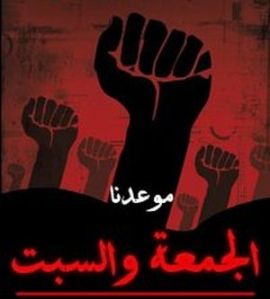 This could to some extent tell my situation when I was inside the “liberated territories” of Syria, that is the territories controlled by the free army, the armed forces of the Syrian opposition. But still it is not the whole truth. It is true that not all the free army militants are devoted jihadists, although most of them are thinking, or telling, that what they are practicing is “Jihad”. The truth is there are a lot of ordinary people, even thieves, etc. among them, as in any armed struggle. My first and lasting impression about the current situation in Syria is that there is no longer a popular revolution going on there – what is taking place there is an armed revolution that could degenerate simply into a civil conflict. The Syrian people, which showed unprecedented courage and determination in the first few months of the revolution to defy Assad’s regime despite all its brutality, is really exhausted now. 19 long months of fierce repression, and lately, of hunger, scarce resources of all types, and continuous bombardment of the regime’s army, weaken its spirit.

 zabalaza.net