The State of Climate Change

by Bongani Maponyane (ZACF)
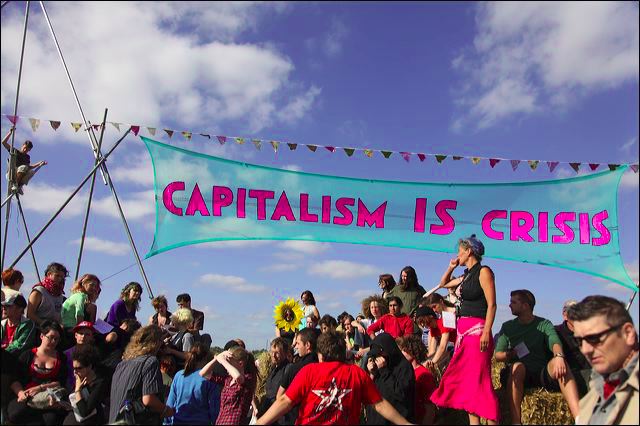
climate capitalismThe planet is warming. This is not new to the earth’s history, which is billions of years old. But why the controversy regarding this fact? Does it lie in the association between climate change and the man-made contributing factors to this change? Is it because of the reality of the impact of the industrial age; the very foundations on which modern capitalism and empire has been built? Many within these industries spend billions on promoting the idea that climate change is a naturally-occurring phenomenon. But scientists around the world show convincingly that man-made fossil-fuel economies (economies built on the use of oil and coal, which release massive amounts of pollution and carbon dioxide into the atmosphere, creating the greenhouse effect and global warming) have contributed, over a short period of time, to rapidly accelerating the usual naturally-occurring effect. The impact has been, amongst other things, rising sea levels, increased drought and destructive weather patterns. However, this knowledge has been met by a strong response from capitalists – and the politicians they fund – to throw doubt on the role and culpability of the industries that are causing the most damage (and have made them very rich and powerful.) They continue to fund “alternative” research and media propaganda to do so.
Continue reading

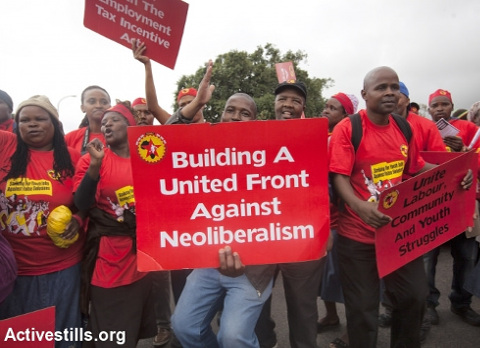
The General Approach of Anarchists/Syndicalists to the United Front and NUMSA

b1028by Jakes Factoria and Tina Sizovuka (ZACF)

In this section we address questions that have been posed to ZACF militants. We are sharing these discussions because we think these are important and pertinent issues in Southern Africa. If you have questions you would us to address in our next issue, please get in touch!

In this column, comrade Themba Kotane, a union militant, asks:

Will the United Front (UF) address the crises we are currently facing in South Africa? I am concerned about how the UF works and who leads it. In my own view we don’t need a leader, we need to all have equal voice. How can we build the UF as a basis for a stateless, socialist, South Africa?

Jakes Factoria and Tina Sizovuka respond:

Continue reading

SPEECH: Working Class Struggle, Blazing a Path to Freedom

FAU book graphic439 1Talk by Lucien van der Walt at 24 Sept 2012, Heritage Day event, Joza Township, Grahamstown

NOTE: Heritage Day is a post-apartheid South African national holiday; unlike most, it has no clear link to major struggles in the past, although there are efforts to position it as a more “political” day. The talk below was given by Lucien van der Walt at an event organised by Sakhaluntu Cultural Group in Grahamstown, for black youth.

Thank you all for coming. Thank you, chair, for the invitation. Thank you, organisers, for the event today. Today looks like a great day, a great day to look forward.

But before we look forward, we must look back as well. Unless you know where you come from, you will never know where you can go.

Continue reading

For how long can South African elites keep misleading the people?

xenoby Philip Nyalungu*

Those in power don’t want to confront the status quo of hatred against immigrants, or South Africa’s imperialist role in the region. They have a narrow set of interests: getting votes, accumulating wealth and power. However, the recent wave of attacks on immigrants and the ruptures of relations with other African countries – especially where South African corporations are operating – have touched the most delicate nerves of the established political powers, who have vowed to advance corporate interests in making profits.

Continue reading

Class Rule Must Fall! More Statues, More Working Class


Rhodes-Must-Fall
by Leroy Maisiri*

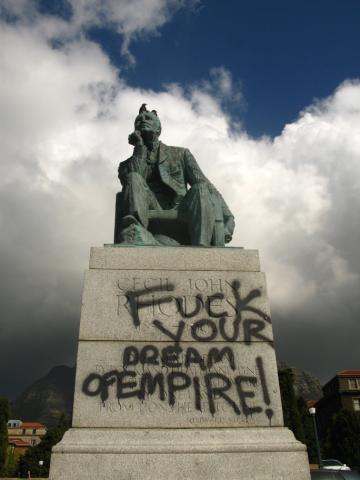
Slogans like “Erase Rhodes”, “Rhodes so White,” and Rhodes must Fall,” emerging from student groups at South Africa’s elite universities, recently monopolised social media. These have taken off, because South Africa is in need of great structural change; 20 years after the important 1994 transition, many black people remain trapped in oppressive conditions.

No one would deny that during apartheid blacks, Coloureds and Indians were racially oppressed, abused, and as workers, exploited. If removing statues and changing place names can help solve the problems, and form part of a meaningful redress of past and present injustices, then such actions must be supported.

But can such demands really do so?

Continue reading

Zabalaza #14 Editorial: Where to, South Africa? Anarchist-Communist Reflections

Zumaby Tina Zisovuka (ZACF)

In 2013, Zabalaza/ ZACF took a decision to redirect our energies into certain aspects of our work that we felt were more urgent and immediately important at the time, given the challenges and conditions we were facing. The bad news is that this decision took its toll on our publishing work, which partly explains the long gap (over two years) between issues of our journal. The good news is that this reorientation has paid off elsewhere: hiccups notwithstanding, over the past two years our militants have participated in various new initiatives in and around Johannesburg, where we have witnessed a renewed and growing interest in anarchism. The inclusion of several new names in this issue is a much-welcomed reflection of these changes.

Over the past two years, there have been many important developments that deserve special consideration. We have tried to include our own, anarchist, appraisals of these where possible, although in some respects we have fallen unavoidably short. It is precisely because South Africa’s burning social and national issues remain unresolved (in fact they cannot be resolved within the existing capitalist and political party systems established in 1910 and 1994), that the country continues to undergo social turbulence, seen in strikes, union splits, struggles over symbols, and sadly, anti-immigrant attacks.

Continue reading

Anti-Immigrant Attacks in South Africa. Report by First of May Anarchist Alliance member

by D. (First of May Anarchist Alliance)

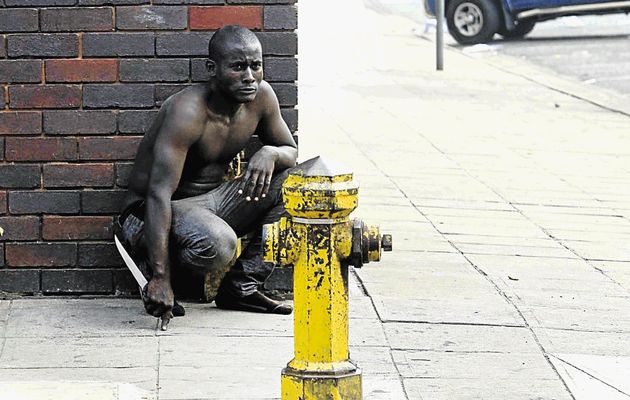
KNIFE EDGE: An immigrant waits for gangs of locals that attacked foreign shop owners in the Durban city centre yesterday. At least three people were stabbed and one burnt. Image by: TEBOGO LETSIE

KNIFE EDGE: An immigrant waits for gangs of locals that attacked foreign shop owners in the Durban city centre yesterday. At least three people were stabbed and one burnt. Image by: TEBOGO LETSIE

The following is a short summary of the anti-immigrant violence happening in several cities and townships in South Africa. The Report is made by a member of First of May Anarchist Alliance currently living in South Africa and has been slightly edited by the ZACF with the author’s consent.

Continue reading

Troubled SA must take May Day seriously

byrne-etal-troubled-sa-must-take-may-day-seriouslyThis is a time to embrace working-class unity and challenge the status quo of capitalist oppression.

May Day – a call to build an international movement of working class and poor people across lines of race, nation and religion for workers’ control and democracy from below, social justice and freedom from political and economic oppression – remains critical. In a country racked by anti-immigrant violence, racial and ethnic tensions, the fragmentation of the labour federation Cosatu, corporate scandals and political corruption, it is time to remember May Day’s roots and aspirations.

Download PDF here

The day has become an institutionalised festival, yet its origins lie in powerful struggles for a united, anticapitalist, bottom-up, global justice movement, affirming the common interests of people, worldwide, against ruling elites and their divide-and-rule policies.

Continue reading

South Africa and the DRC: Has Rhodes passed on the baton?

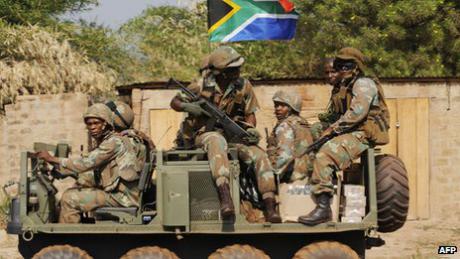
SA troops_0

In the heat of the struggle for statues like that of Rhodes – the arch-symbol of British imperialism – to be pulled down, and in the midst of the horror of the recent xenophobic attacks in South Africa, few people seemed to notice an announcement by Jacob Zuma that South African troops will remain at war in the Democratic Republic of the Congo (DRC) for another year.

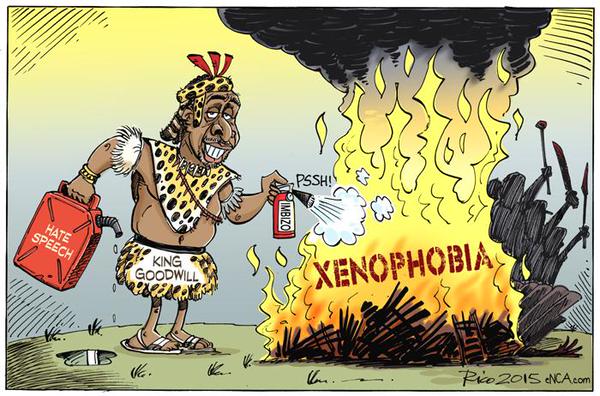
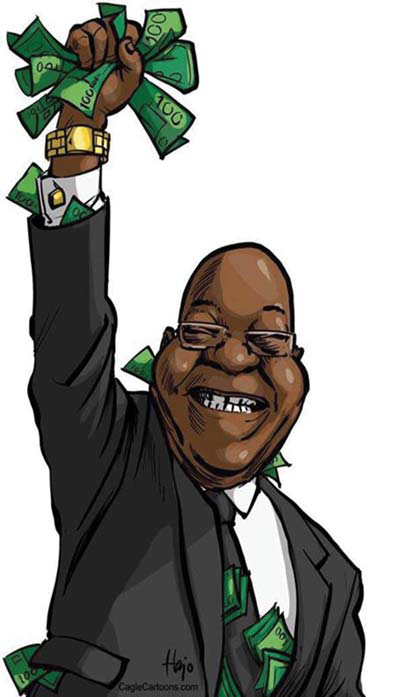
Of course, Zuma made this announcement on behalf of the South African ruling class – comprised today of white capitalists and a black elite mainly centred around the state, Black Economic Empowerment (BEE) and ‘traditional’ royal families. In this there was a real irony that while Rhodes’s likeness was falling from its perch at the University of Cape Town, and immigrants from other parts of Africa and Asia were being attacked because of sentiments stoked up by a rehabilitated relic of apartheid (the Zulu king, Zwelithini), the South African ruling class felt brash enough to say they will be continuing their own imperialist war in the DRC.

Like in all wars, including those promoted by the likes of Rhodes, it is not the ruling class that are actually doing the fighting in the DRC, but the sons and daughters of the working class. Reflecting on the First World War, Alexander Berkman noted that the working class are not really sent to war to save the poor or workers, but to protect and further the interests of the rulers, governors and capitalists of their countries1. This applies equally so today in the case of South African troops’ involvement in the DRC. Indeed, what South Africa’s war in the DRC shows is that the South African ruling class don’t just exploit and oppress the working class in South Africa, but the working class in many other areas in the rest of Africa. It also shows that both at home and abroad they will use violence to do so, including trying to turn different sections of the working class on one another, by amongst other things tapping into nationalism, racism, ethnic chauvinism and xenophobia.

Continue reading

The party is haunting us again

by Shawn Hattingh (ZACF)

460_0___30_0_0_0_0_0_20140701t135820z_01_msh08_rtridsp_3_safricastrikedemand01072014160723819Karl Marx once said that history repeats itself, first as a tragedy then as a farce. A case in point is that in South Africa sections of the left are once again calling for a mass workers’ party (MWP) to be formed to contest elections – this they believe will bring us closer to revolution. History says otherwise.

Of course the new calls for a MWP stem from the National Union of Metalworkers of South Africa (NUMSA) breaking from the African National Congress (ANC). As an outcome NUMSA is exploring the possibility of setting up a MWP to contest elections. Many Marxist and leftist influenced organisations, but also cadres within NUMSA, are therefore providing reasons why activists should be interested in such a party.

Continue reading