by Pitso Mompe (ZACF)
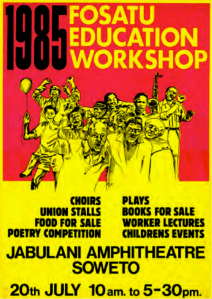 Trade unions have played a major role in defending workers’ rights against the bosses and politicians, also in advancing workers’ interests. This is why, even today, workers are still loyal to their unions. However, there are obstacles within the unions – one being the union bureaucracy, of paid and full-time officials. This can develop its own interests, undermining the unions.
This is a challenge faced by many unions. This bureaucracy is at times unable to represent workers’ grievances effectively: they often spend more time fighting amongst themselves for certain positions within the union instead of for workers’ rights. Due to this bureaucracy, which is structured hierarchically, higher positions hold more power, including in terms of decision-making. Those in leadership are often full-time and recieve much higher salaries than those of the workers they represent. This means they often want to prevent union actions that threaten their own positions, like long strikes.
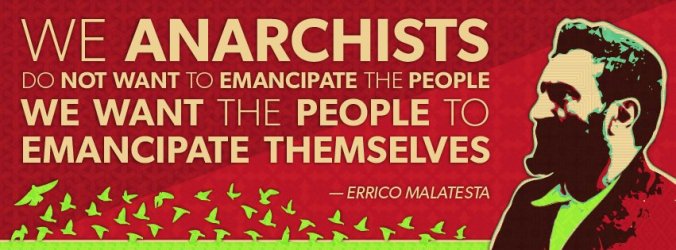 We, anarchists, are committed to building a society based on self-management and equality. We identify with the analyses and experiences of Mikhail Bakunin, who stated the need for freedom beyond the limited confines of “democracy” – where you are only free to vote on who is next to govern you. Bakunin argued that freedom comes responsibility: this included responsibility to others in the maintenance of this freedom. We need a society based on these principles; an anarchist society which expects from each according to their ability, and provides to each according to their needs.
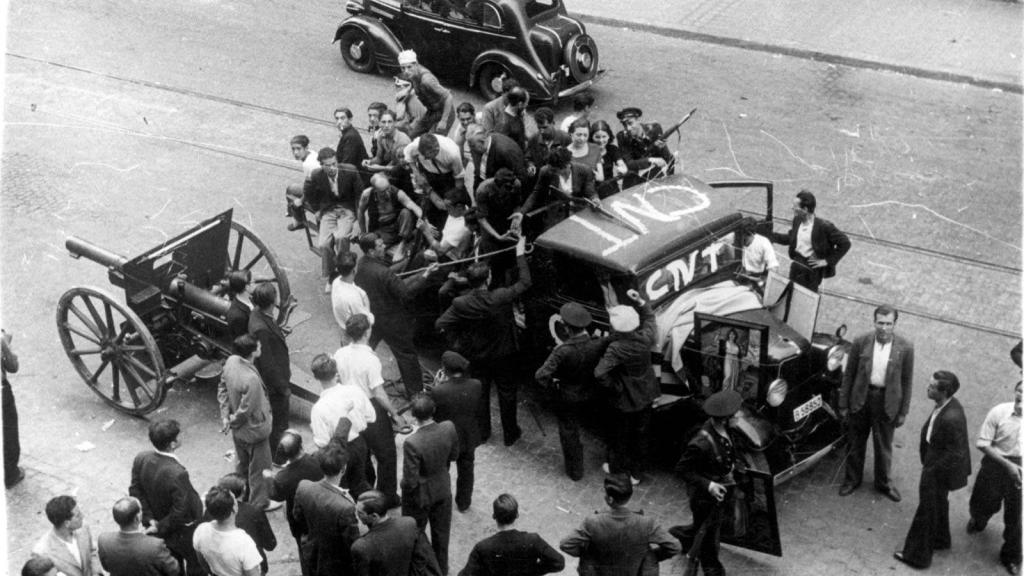
 Almost 80 years ago the peasantry and working class of Spain, inspired by anarchism and syndicalism, rose up to change the world. The Spanish Revolution of 1936-1939 involved millions creating, from below, a new society of freedom based upon equality and participatory democracy. Had the revolution succeeded and spread, the world would have changed forever. Rather than being trapped in decades of oppression and crisis and futility, humanity could have invested the last three generations into a universal human community of libertarian communism and scientific advance.
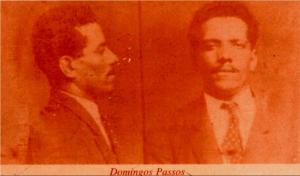 ‘I woke at 5.00 am. Passos, who had been up and about for hours, was sitting on his bed reading Determinism and Responsibility by Hamon. I grabbed a towel and went downstairs to wash my face. When I came back from the yard, after drying off, I saw two individuals. It was a moment or two before I realised who they were. With revolvers drawn they spoke to me and asked me harshly: “Where’s Domingos Passos?”Anticipating another of the attacks that our comrade had been through so often before, I was keen to cover for him and said that he was not around. I told them: “There’s no Domingos Passos living here!”
 As the 100th anniversary of the outbreak in August 1914 of World War One fades, let us remember that imperialism harms all working class people – including those in imperialist and Western countries, and the white working class.
 The poem below was written by


 zabalaza.net