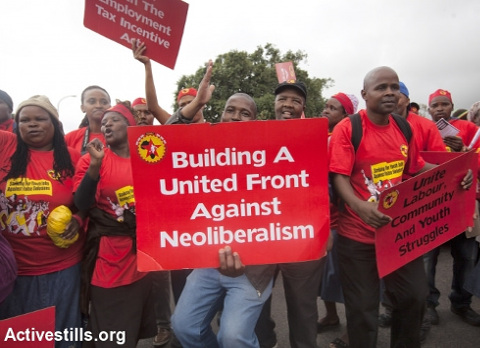
 by Jakes Factoria and Tina Sizovuka (ZACF)
In this section we address questions that have been posed to ZACF militants. We are sharing these discussions because we think these are important and pertinent issues in Southern Africa. If you have questions you would us to address in our next issue, please get in touch!
In this column, comrade Themba Kotane, a union militant, asks:
Will the United Front (UF) address the crises we are currently facing in South Africa? I am concerned about how the UF works and who leads it. In my own view we don’t need a leader, we need to all have equal voice. How can we build the UF as a basis for a stateless, socialist, South Africa?
Jakes Factoria and Tina Sizovuka respond:

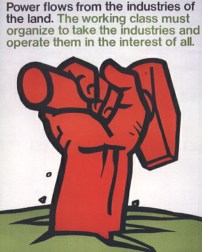 Movements for ecological awareness and protection, such as those against climate change, are making important contributions to social understanding regarding the effects of industrial production and consumption. However, many arguments and analyses against ecological destruction and for environmental protection are seemingly not based on a class analysis and not informed by the lives of working class people. Thus many of these analyses do not question the systems of domination that lie at the root of social inequality and ecological devastation: capitalism and the nation state.
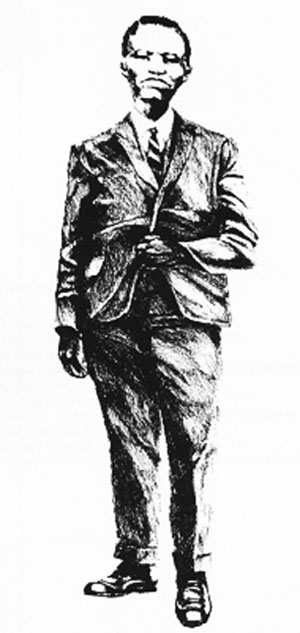
 The son of a Wesleyan minister, Thibedi William Thibedi was one of the most important black African revolutionary syndicalists in South African history. Thibedi was a leading figure in the International Socialist League (ISL) and in the Industrial Workers of Africa syndicalist union. Later he played an important role in the early Communist Party of South Africa (CPSA), particularly its union work. He was active in all of the key black unions from the 1910s to the 1940s.
 Published in 2011 by Pambazuka Press, My Dream is to be Bold: Our Work to End Patriarchy is the welcome result of the work of Feminist Alternatives (FemAL), “a group of feminist activists in South Africa working against sexism and oppression”. The book provides insight into the lives, struggles and ideas of nineteen feminist activists based in South Africa, who organised “to come together over two days and reflect on women’s organising in the context of a patriarchal, neoliberal social and world order”. The book itself is a collection of writings by the nineteen activists, developed during a publication workshop held in Cape Town in June of 2009. The workshop, organised by FemAL, sought “to build collective analysis through speaking to other women, comparing experience, collectively trying to understand that experience and theorise it”.
 Beginning in December 2010, a series of uprisings in Arab countries brought hope to workers and the poor – not only in the Middle East but throughout the world. Dictators have been toppled in Tunisia, Egypt and Libya, and struggles continue throughout the region.
 zabalaza.net