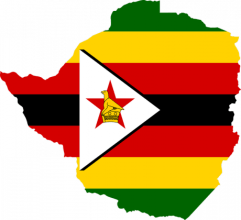
 This article looks at the recent events around the removal of Robert Mugabe from power in Zimbabwe. It argues that this will not bring liberation for the people of Zimbabwe, as it does not address the problems Zimbabwe faces – a ruthless ruling class, its state, capitalism and imperialism.
Robert Mugabe, the longstanding authoritarian ruler that has waged a war against Zimbabwe’s poor, is gone. He was forced to resign in the wake of a coup – although the main actors in the coup comically denied it was one.
When it was announced that Mugabe was exiting power, tens of thousands of people took to the streets of Harare to celebrate. Many are hoping that his exit will bring change for the better for Zimbabwe. This hope, unfortunately, may be wishful thinking. The reason for this is that Mugabe was a symptom of far deeper problems, and without addressing those problems, Zimbabwe cannot be free; nor can there be genuine equality. Similarly, those that removed Mugabe are cut from the same cloth, and come from the same ruthless ruling class.
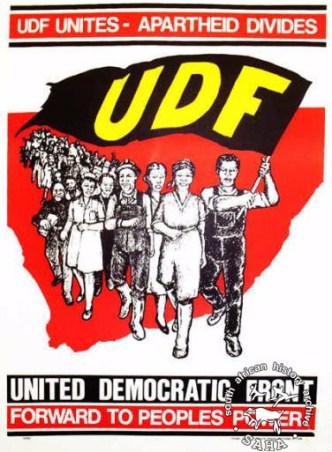 The talk that I’m going to present today is based on a research project that I carried out with my colleague Vladislav Kruchinsky in South Africa in 2011-2013. The aim of our research was to analyse and explore the methods and practices of self-organisation from below that existed in the crucial 1980s period of the anti-apartheid struggle.
 Before there was the Congress of South African Trade Unions, today’s COSATU, there was FOSATU. FOSATU was set up in 1979. There had been strikes and struggles in the 1970s, starting with a big strike wave in Namibia from 1971-1972, which was then a South African colony, then a big strike wave starting in Durban 1973, which spread around the country. Although we remember 1976 for the bravery of the youth and students, we must remember that the 1976 uprising also involved general strikes by the black working class, mass stay-aways.


 zabalaza.net