 Racism has been a curse in South Africa, and remains embedded in the society. But how scientific are racist ideas? Where do they come from? And how can we fight racism and create a truly equal and fair society? What do we as revolutionary anarchists think?
Racial conflict, inequality, and hatred are not natural, but fed and reared by capitalism and the state. To really change the system, we need a massive programme of upgrading education, health, housing and services; an end to the racist heap labour system; a challenge to the ideological (ideas) control that splits the working class; and a radical redistribution of wealth and power to the working class and poor –which in South Africa, means primarily the black working class and poor –as part of a social revolution.
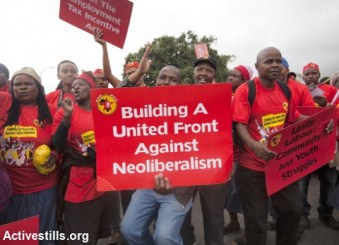 A call for socialist Left unity is heard widely today in South Africa, but is usually taken as a call for unity of praxis (unity in theoretical programme and action). This is sometimes framed as transcending old divides (these seen as outdated, divisive or dismissed as dogmatic), and sometimes as unity in order to have action (rhetorically set up as the opposite of “arm chair” theory).
 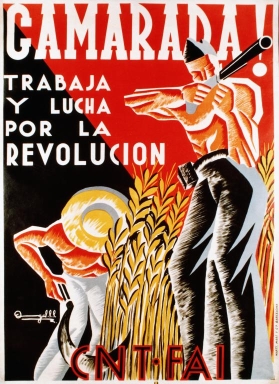 In this edition of the Education Series we look at one of the greatest experiments with an alternative to capitalism: the 1936 Spanish Revolution. People today seeking a democratic socialist and egalitarian society can draw lessons from both its successes and failures.
 In this education series we look at experiments, which have arisen through working class struggles, to create alternatives to capitalism. This will include looking at present and past alternatives to capitalism. In doing this, we are not saying these experiments should be carbon copied – they have often taken place in very different times and contexts.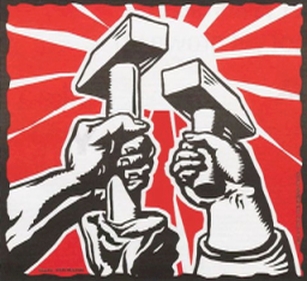
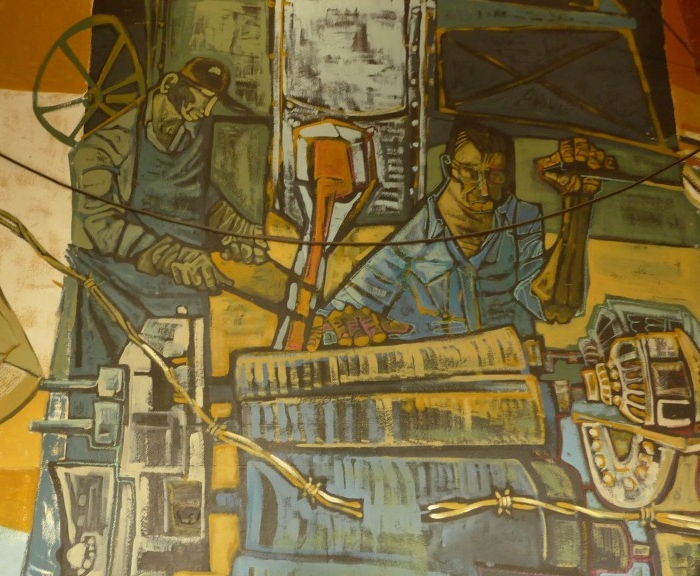
 On 17 November 2017, the Minister of Labour announced the state intends to carry out a new round of attacks on workers and their rights. The attacks come in the form of three Labour Bills currently being considered by parliament: the Basic Conditions of Employment Bill, the National Minimum Wage Bill and the Labour Relations Amendment Bill. If passed, the changes to the labour laws these bills propose will be a major attack on workers’ rights, won through decades of struggle, and will further deepen and entrench inequality and roll back important democratic gains.
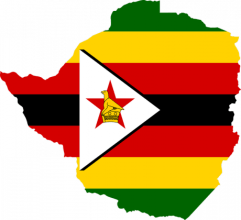 It’s been around 100 days since the birth of a “new” Zimbabwe. It’s been around a 100 days since 37 years of authoritarian rule by Robert Mugabe – Head of State since 1980 – finally came to an end. Zimbabwe has a new President, Emmerson Mnangagwa, who gained power through a soft military coup against Mugabe, and his chosen successor, Grace Mugabe. And recently, Zimbabwe mourned the death of former Prime Minister of Zimbabwe, Morgan Tsvangirai: an opposition leader, he came from the trade unions, and spent most of his life fighting against Mugabe.
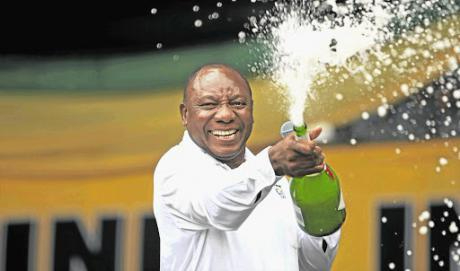 In South Africa, for white and international capital the last few weeks have been a period of rejoicing due to Ramaphosa being elected as ANC President. The slate that Ramaphosa won on was the promise to eradicate corruption within the state and the ANC. The reality is that the battle within the ANC and now Zuma’s total demise has very little to do with addressing corruption – despite Ramaphosa’s claims.
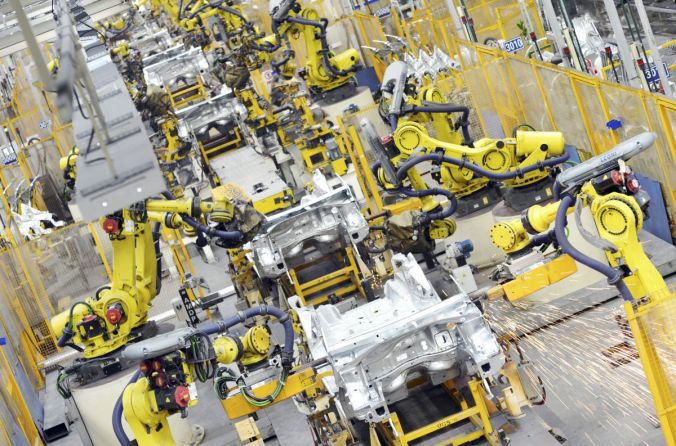 Mechanisation and automation have been called the Fourth Industrial Revolution. But these are not inevitable or neutral economic realities. They are political weapons of oppression under capitalism. It is a war against the working classes to increase profits. It is no an accident that bosses choose to mechanise and automate in the context of the massive crisis of capitalism.
 zabalaza.net