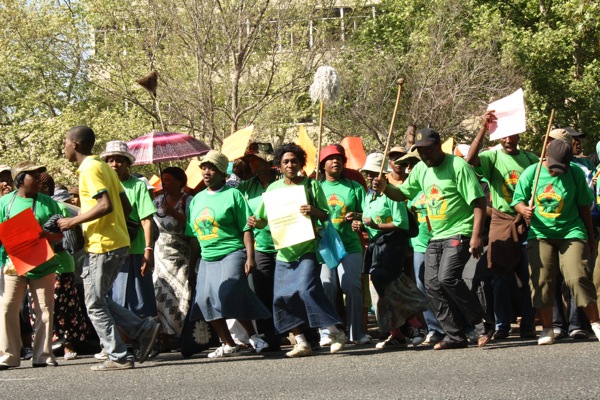
ANC wys sy ware kleure! Werkers Vermoor!

Kapitaliste en Politici Skuldig! Stop Polisie Brutaliteit.

Geen Geregtigheid, geen vrede. Weg met Zuma, weg met Malema, Weg met Lonmin!

Marikana massacre

Die Grondwet maak voorsiening vir politieke regte en gelykheid.  Dit is egter duidelik dat die base en politici maak soos hulle wil.  Hulle loop oor die mense.  Dit is duidelik in die polisie moorde van die stakers by Lonmin se Marikana myn.

pdf iconA4 double-sided Flyer [Afrikaans]
Download here

English | isiZulu | seTswana

Continue reading

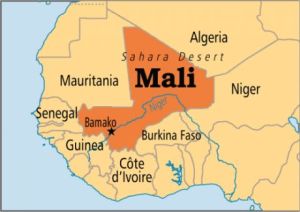
The War in Mali: for Uranium, Gold and Oil

mali

Regardless of what is said in the media, the aim of this new war is none other than to strip another country of its natural resources by ensuring access for international companies to do so. What is now happening in Mali with bombs and bullets, is the same thing that is happening in Ireland, Greece, Portugal and Spain through debt bondage.

The French government has stated that:

“it would send 2,500 soldiers to support Malian government soldiers in the conflict against Islamist rebels. France has already deployed around 750 troops to Mali (…) We will continue the deployment of forces on the ground and in the air (…) We have one goal. To ensure that when we leave, when we end our intervention, Mali is safe, has legitimate authorities, an electoral process and there are no more terrorists threatening its territory”. [1]

Continue reading

Anarchists and the French-Algerian War

Book review of David Porter’s “Eyes to the South; French Anarchists and Algeria”

by Wayne Price

eyestothesouthHow did French anarchists deal with the Algerian revolution? How did anarchists in an imperialist country reacted to a war for national liberation? What does this tell us about how anarchists today should relate to current struggles for the self-determination of oppressed peoples?

From 1954 to 1962 a vicious war raged between the people of Algeria and the French state. Anarchists in France played a small but significant role in opposing their government’s colonial war. Their activities and views are covered in this exceptional book, along with anarchists’ attitudes toward post-war Algeria. The ways French anarchists opposed the war, and the varying views they held about it, may help today’s anti-authoritarians (in the U.S. and elsewhere) in thinking through our views about struggles against national oppression.

Continue reading

In Egypt as well as in France, we say no to fascism! Statement by Coordination des Groupes Anarchistes

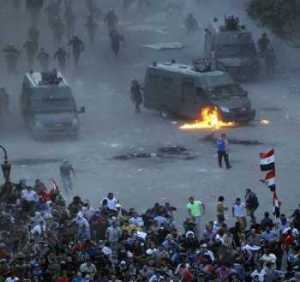
egypteIn a context of capitalist crises, the popular revolts are expanding since several years. In Egypt, the revolt took a revolutionary dimension by chasing Mubarak. But it was confronted since the begining to the counter-revolutionary dynamic of religious fascism.

The Egyptian Muslim Brotherhood, after staying carefully away from the popular revolt, a revolt they didn’t initiate, were called as a spare wheel by Egyptian bourgeoisie as well as western bourgeoisie.

Playing the historical role the fascists currents – whether they put forward a religion or not – always played, they took a pseudo-revolutionary stance to gain access to political power, becoming thus the real tool of the counter-revolutionary takeover.

Continue reading

Bourgeois Nationalists are Destabilising the Working Class in South Africa

by Jonathan Payn (ZACF)

Anarchism is an idea that stands for the reorganisation of society and the economy in order to meet peoples’ needs and not for profit, according to the principle, ‘from each according to ability to each according to need’. It stands for a world in which there are no longer bosses and workers, masters and slaves; a world in which everyone is a free worker, and exploitation and oppression have been abolished.

It was recently reported by various newspapers that ‘a “notorious gang of anarchists” with links to cash heists is attempting to destabilise the Gauteng ANC’. Newspaper articles [*] quoted ANC provincial secretary David Makhura as saying that an ANC investigation would ‘expose the hidden hand of business people who are fuelling and financing activities that seek to disrupt the functioning of the ANC’.

Continue reading

Zabalaza: A Voice for Organised Anarchism in South Africa

The following article was recently published in the CNT periodical
(http://www.cnt.es/sites/default/files/cnt_381_web.pdf)

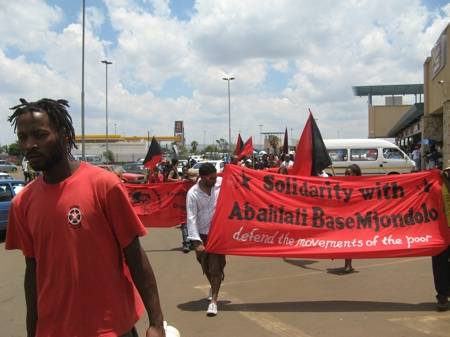
zab-soli-with-abmThe Zabalaza Anarchist Communist Front, or ZACF – Zabalaza meaning ‘struggle’ in isiZulu and isiXhosa – is a specific anarchist political organisation based in Johannesburg, South Africa. It is a unitary organisation – or federation of individuals, as opposed to a federation of collectives – whereby membership is on an individual basis, by invitation only. This is because we have seen – through our own experience, as well as that of global anarchism historically – that we can accomplish more as an organisation, and be more effective, when our members share a certain level of theoretical and strategic unity, and collective responsibility.

Continue reading

Cleaning out super-exploitation

By James Pendlebury, ZACF

How can the most harshly exploited workers fight back against the bosses?

Cleaning workers throughout South Africa have been on strike since Monday 8 August. They are demanding a living wage of R4 200 per month, as well as a 13thcheque and shorter hours.

Many of these workers are now paid R2 000 per month or even less, and work under the harshest conditions. The vast majority are black, and a great many are women; their supervisors are often racist and sexist bullies of the worst kind. They are frequently compelled to use dangerous chemicals, without even the protection of gloves; these chemicals can make them sick, and some have died as a result.

Continue reading

Anarchist Economics (a Brief Introduction)

The bosses need us ...we don't need them!by Warren McGregor (ZACF)

Comrades, this presentation covers the themes of global redistribution, economic growth of a new type, and renumeration and what these may mean in an economy based on anarchist principles. I was mandated to examine how these themes related to the two required readings for this week:

(i) Read’s Kropotkin: Selections from his Works, and
(ii) Albert’s Parecon

Continue reading

All GEARed Up for a New Growth Path – On the Road to Nowhere

by Shawn Hattingh (ZACF)

It has become common knowledge that South Africa is the most unequal country in the world. Only 41% of people of working age are employed, while half of the people employed earn less than R 2 500 a month [1]. Worse still, inequality is growing with wages as a share of the national income dropping from 50% in 1994 to 45% in 2009; while profit as a share of national income has soared from 40% to 45% [2]. In real terms this means that while a minority live well – and have luxurious houses, swimming pools, businesses, investments, and cushy positions in the state – the majority of people live in shacks or tiny breezeblock dwellings, are surrounded by squalor, and struggle on a daily basis to acquire the basics of life like food and water. Likewise, while bosses, state managers, and politicians – both black and white – get to strut around in fancy suits barking orders; the majority of people are expected to bow down, do as told, and swallow their pride.

Despite being expected to be subservient, however, protests in working class areas are spreading. People have become fed up with being unemployed, having substandard housing, suffering humiliation, and having their water and electricity cut off. In fact, per person South Africa has the highest rate of protests in the world [3]. It is in this context of growing community direct action, even if still largely un-coordinated, that the state has felt it necessary, at least on a rhetorical level, to declare its intentions to lead a fight against unemployment and reduce inequality. To supposedly do so it unveiled a new economic framework, The New Growth Path (NGP), late in 2010 with the declared aim of creating 5 million jobs by 2020 [4].

Continue reading

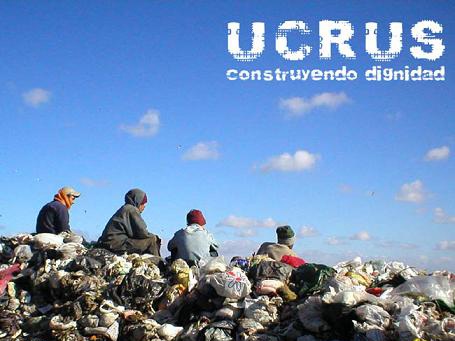
Picking Up the Slack in Waste Collection and Ecological Protection: the Struggle of Recyclable Waste Pickers in Uruguay and Brazil

by Jonathan Payn (ZACF)

Across South America there is a growing movement – assuming different forms and characteristics, but with similar origins, demands and objectives – that, despite it being located at a strategically important intersection between two critical social issues – class struggle and ecology – seems to me to have received little attention in South African academic and activist circles. And this is true despite the fact that the social and economic conditions that gave rise to this movement prevail in South Africa, as they did – and continue to – in many South American countries. Perhaps this is due to the fact that this movement concerns people largely marginalised by industrial society and so-called ‘brown’ ecological issues – such as the pollution and contamination of rivers and dams surrounding poor communities, most acutely effecting the workers and poor – as opposed to the much more sanitary ‘green’ ecological issues – such as conservation and animal welfare – often associated, in South Africa at least, with liberal white activists from the middle and upper classes [1].

This is the movement of the catadores, as they are known in Brazil, and clasificadores in Uruguay; the recyclable waste pickers and sorters who, similarly to South Africa, constitute a growing informal sector in the industrial production cycle. This includes all people – not formally employed by public or private waste management services – who collect, transport, classify and sell recyclable waste for a living – or ‘work with scrap’ – thus “reducing demand for natural resources and reducing greenhouse gas emissions” [2]. A category of work which, according to the World Bank, is performed by 15 million people globally – or one percent of the world population [3] – and has become increasingly common in South Africa in recent years.

Continue reading