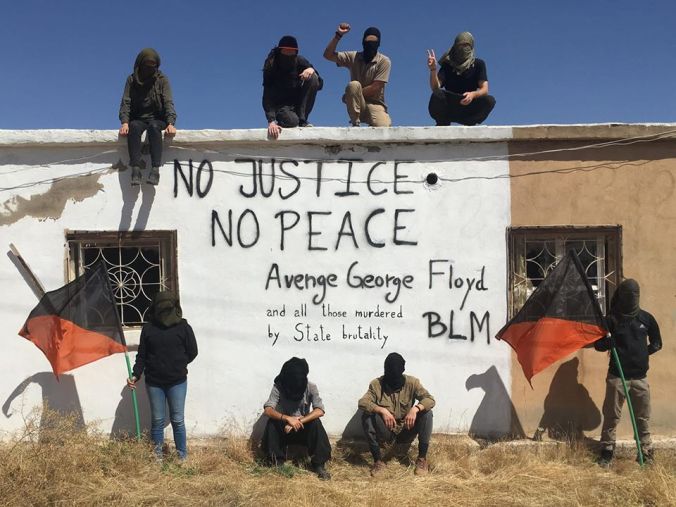
Anarchists in Rojava, Northern Syria, standing in solidarity with Black Lives Matter and anti-colonial struggles.
Hundreds of thousands of protesters have taken to the streets across the United States and beyond in response to the police killing of George Floyd. Protesters in Minneapolis, New York, Los Angeles and dozens of other cities demanding justice were met with extreme police violence, leading to more deaths and numerous injuries.
A common slogan heard at the protests is “No justice, no peace!,” raising the essential question of how a political system founded on a bloody history of white supremacy, capitalism and colonialism can ever provide true and meaningful justice. Some call for police reforms. Others call for the redistribution of funds. Still others argue that abolishing the police is the best option, but many people — even on the left — find it hard to imagine the viability of such a system.
Democratic confederalism, the ideological framework organizing society in Rojava, outlines the features of a post-revolutionary justice system.
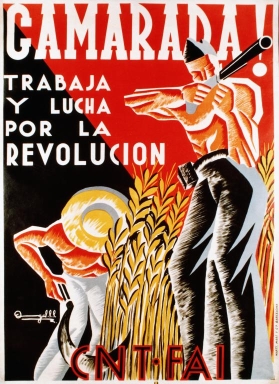 In this edition of the Education Series we look at one of the greatest experiments with an alternative to capitalism: the 1936 Spanish Revolution. People today seeking a democratic socialist and egalitarian society can draw lessons from both its successes and failures.
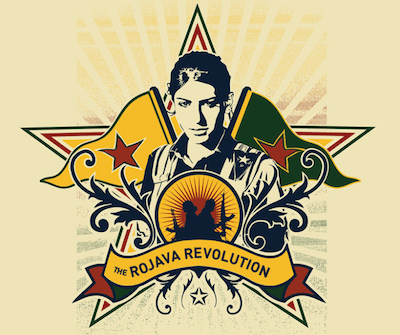 In this education series we look at experiments, which have arisen through working class struggles, to create alternatives to capitalism. This will include looking at present and past alternatives to capitalism. In doing this, we are not saying these experiments should be carbon copied – they have often taken place in very different times and contexts.
 We, anarchists, are committed to building a society based on self-management and equality. We identify with the analyses and experiences of Mikhail Bakunin, who stated the need for freedom beyond the limited confines of “democracy” – where you are only free to vote on who is next to govern you. Bakunin argued that freedom comes responsibility: this included responsibility to others in the maintenance of this freedom. We need a society based on these principles; an anarchist society which expects from each according to their ability, and provides to each according to their needs.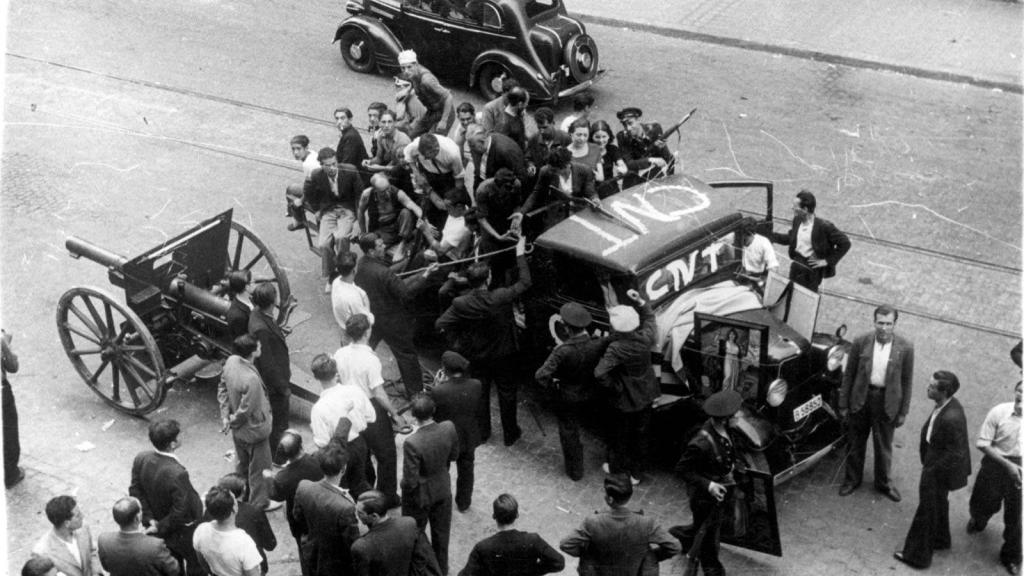
 zabalaza.net