by Michael Schmidt
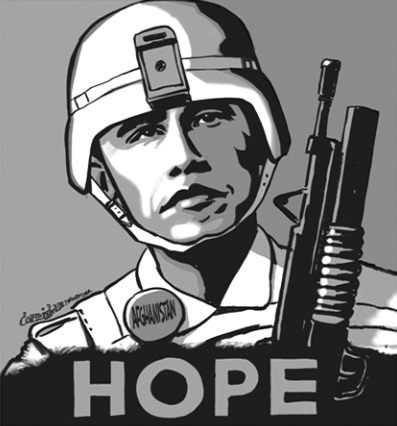
US President Barack Obama’s military regime (for as commander-in-chief of the world’s largest military machine, his is not merely a mild “administration”), has proven once again that when it comes to American imperialism’s dealing with the darker majority of humanity, having a black man in the Oval Office simply doesn’t matter.
As we argued in the last edition of Zabalaza, the widespread myth that Obama’s skin-colour automatically made him a better man was a deeply racist argument that would be proven to be threadbare as soon as Obama ordered the invasion of his first “country of colour” – and this happened in under a month of his inauguration when he authorised sending 17,000 extra troops to Afghanistan.
 But American imperialism is not just about the stick of armed intervention or enforced regime-change: we must not forget the carrot of aid, aid that can be temptingly held out, and then withdrawn if the recipient nation is not suitably compliant.
Egypt, the most populous nation in the Arab world, and, along with Nigeria and South Africa, one of the most economically and militarily powerful states in Africa, has been the largest recipient of US aid after Israel since it signed a peace accord with Israel in 1979 – sometimes topping US$2 billion/year, US$1.3 billion of that in military aid and between US$100 million to US$250 million in economic aid. Ironically, under President George W Bush, the Americans gave US$45 million to “good governance” and “democratisation” programmes, with a substantial chunk of that bypassing the state and going directly to civil society organisations. But over the past year, Washington has slashed this civil society aid to Egypt by more than half, down to US$20 million.




 zabalaza.net