An interview by Organização Anarquista Socialismo Libertário (Sao Paulo, Brazil) with Jonathan P. and Warren McGregor, two militants from the Zabalaza Anarchist Communist Front (ZACF)

ZACF logoby Organização Anarquista Socialismo Libertario (São Paulo, Brazil)

OASL: Could you briefly describe what the ZACF is, and what model of organisation you chose to enact?

ZACF: The Zabalaza Anarchist Communist Front , ZACF or just Zabalaza (which means “struggle” in the African languages of isiXosa and isiZulu), is a specific anarchist organisation, or a political organisation. The ZACF identifies with the platformist tradition within anarchism, or in Latin American terms, with Especifismo.

Zabalaza is a unitary organization, with membership open only to committed anarchist communists, who agree with our goals and principles, and are able to show them in practice.

As an organization that identifies itself with the platform, while recognizing its limitations and weaknesses, we demand a certain level of theoretical and strategic unity and collective responsibility. This is mainly due to our own experience, when we discovered that a smaller but  more firmly united organization, with a greater level of strategic and theoretical unity and collective responsibility, can achieve much more than a large organization with very little common understanding of its goals and objectives, little strategic and tactical unity, and therefore little collective responsibility.

This is how we understand the distinction between the specific anarchist organization, an organization open only to militants of a particular tendency within anarchism, and the organization of synthesis, bringing together those who identify themselves as anarchist, even if their interpretations of anarchism is completely different, even opposed.

Continue reading

Why May Day Matters: History with Anarchist Roots

May Day MartyrsWhen we celebrate May Day we seldom know or reflect on why it is a holiday in South Africa and in many parts of the world. Sian Byrne, Warren McGregor and Lucien van der Walt tell the story of powerful struggles that lie behind its existence and of the organisations that both created it and kept its meaning alive.

Faced with neo-liberal globalisation, the broad working class movement is being forced to globalise-from-below. Working class internationalism is nothing new; we need to learn from the past.

  • Download this text as a PDF leaflet here

May Day or international workers day started as a global general strike to commemorate five anarchist labour organisers executed in the United States in 1887. Mounting the scaffold, August Spies declared: ‘if you think that by hanging us, you can stamp out the labor movement – the movement from which the downtrodden millions, the millions who toil and live in want and misery –the wage slaves – expect salvation – if this is your opinion, then hang us! Here you will tread upon a spark, but there, and there, and behind you and in front of you, and everywhere, flames will blaze up. It is a subterranean fire. You cannot put it out.’

Continue reading

Especifismo in Brazil: An Interview with the Anarchist Federation of Rio de Janeiro (FARJ)

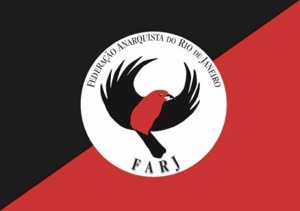
FARJ FlagIn this interview, realised between August and October 2010, the Anarchist Federation of Rio de Janeiro (Federação Anarquista do Rio de Janeiro – FARJ) talks about its understanding of concepts such as especifismo, organisational dualism, social insertion and the role of the anarchist political organisation in relation to social movements and the class struggle.

It also deals with the recent entry of the FARJ into the Forum of Organised Anarchism (Fórum do Anarquismo Organisado – FAO) and the social effects of Rio de Janeiro being selected as a FIFA 2014 Host City, as well as sometimes difficult questions, such as finding a balance between necessary levels of theoretical and strategic unity, and the need to grow as an organisation.

  • This text can be downloaded as a PDF pamphlet here

Continue reading

Andries Tatane: Murdered by the Ruling Classes

sabc/police
Images of the footage screened by the SABC, April 13 2011

by Shawn Hattingh (ZACF)

On the 13th April, people in South Africa were stunned. On the evening news the sight of six police force members brutally beating a man, Andries Tatane, to death was aired. The images of the police smashing his body with batons and repeatedly firing rubber bullets into his chest struck a cord; people were simply shocked and appalled. Literally hundreds of articles followed in the press, politicians of all stripes also hopped on the bandwagon and said they lamented his death; and most called for the police to receive appropriate training to deal with ‘crowd control’ – after all, elections are a month away.

Andries Tatane’s death was the culmination of a protest march in the Free State town of Ficksburg. The march involved over 4,000 people, who undertook the action to demand the very basics of life – decent housing, access to water and electricity, and jobs. They had repeatedly written to the mayor and local government of Ficksburg pleading for these necessities. Like a group of modern day Marie Antoinettes, the local state officials brushed off these pleas; more important matters no doubt needed to be attended to – like shopping for luxury cars; banking the latest fat pay check; handing tenders out to Black Economic Empowerment (BEE) connections and talking shit in the municipal chambers. Therefore, when the township residents had the audacity to march, and call for a response, the police were promptly unleashed with water cannons and rubber bullets. If the impoverished black residents of Ficksburg could not get the hint, in the form of silence; then the state and local politicians were going to ensure that they got the message beaten into them.

Continue reading

New Site Announcement

Afrika/FistWelcome to the new Zabalaza website. As folks might have noticed, the old Zabalaza site has had a problem with the navigation buttons for a while. We are now slowly starting to rebuild the site using new software.

However, due to a severe lack of time, its going to be a while before we migrate the whole of the old site to this one, so please bear with us.

We are also in the process of sorting out the registration of the domain name for the new site, therefore we would like to ask our sister organisations not to change their links to the current URL of the new site as this means you will have to do it again when we change Zabalaza.net to point to it.

Your Zabalaza.Net tech crew

Counterpower, Participatory Democracy, Revolutionary Defence: Debating Black Flame, Revolutionary Anarchism and Historical Marxism

by Lucien van der Walt

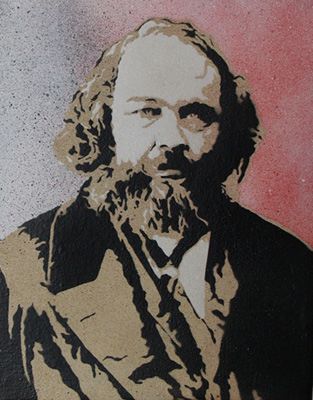
Our good mate Bakunin

This article responds to criticisms of the broad anarchist tradition in International Socialism, an International Socialist Tendency (IST) journal.[1] I will discuss topics such as the use of sources, defending revolutions and freedom, the Spanish anarchists, anarchism and democracy, the historical role of Marxism, and the Russian Revolution.

The articles I am engaging with are marked by commendable goodwill; I strive for the same. Paul Blackledge’s article rejects “caricatured non-debate”.[2] Ian Birchall stresses that “lines between anarchism and Marxism are often blurred”.[3] Leo Zeilig praises Michael Schmidt’s and my book,Black Flame: the Revolutionary Class Politics of Anarchism and Syndicalism, as “a fascinating account”.[4]

Continue reading

Take Back What’s Yours: the Mine-Line Occupation

by Shawn Hattingh (ZACF)

Forward to Worker Control

The economic crisis in South Africa has seen inequalities, and the forced misery of the working class, grow. While the rich and politicians have continued to flaunt their ill-gotten wealth, workers and the poor have been forced to suffer. It is in this context that the majority of the leaders of the largest trade unions have, unfortunately, elected to once again place their faith in a social dialogue and partnerships with big business and the state [2]. So while the state and bosses have been on the offensive against workers and the poor, union officials have been appealing to them to save jobs during the crisis. Not surprisingly, this strategy has largely failed. While union leaders and technocrats have been debating about the policies that should or should not be taken to overcome the crisis, bosses and the state have retrenched over 1 million workers in a bid to increase profits [3]. It is, therefore, sheer folly for union leaders to believe that the state and bosses are interested in compromise – without being forced into it. As seen by their actions, the elite are only interested in maintaining their power, wealth and lifestyles by making the workers and the poor pay for the crisis. For the elite, social dialogue is simply a tool to tie the unions up and limit their real strength – direct action by members. In fact, even before the crisis, social dialogue had been a disaster for the unions contributing towards their bureaucratisation and having abysmal results in terms of them trying to influence the state away from its pro-rich macro-economic policies [4].

Continue reading

The Kronstadt Rebellion: Still Significant 90 Years On

Over the last few years, many on the left have been trying to formulate a vision of socialism based on democracy. As a consequence countless papers and talks have been produced internationally about how socialism needs to be participatory if true freedom is to be achieved. Some have given this search for a form of democratic socialism evocative names, such as ‘Twenty-First Century socialism’, ‘socialism-from-below’ and ‘ecosocialism’. In South Africa the desire for a democratic socialism has also inspired initiatives such as the Conference for a Democratic Left (CDL); while even the South African Communist Party has outlined a need for a more participatory socialist agenda.

  • This text can be downloaded as a PDF pamphlet here

Continue reading

8th of March: Commemorating the International Day of Struggle for Womens Liberation

New pamphlet published with a collection of essays analysing feminism and sexism within the anarchist movement

This pamphlet is published on the 8th of March 2011 (International Women’s Day) to commemorate the struggles against oppression waged by women everywhere. It is published in the hope that these texts will spark much needed debate and sorely-needed change within us as individuals and within the anarchist movement.

  • The PDF pamphlet can be downloaded here

8th of March: Commemorating the International Day of Struggle for Womens Liberation

Continue reading

International Anarchist Statement in Solidarity with Zimbabwe’s Treason Trialists

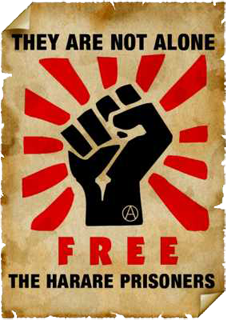
Free the Harare PrisonersWhen Mohammed Bouazizi set himself alight he unwittingly ignited a wave of popular uprisings and rebellions that have spread like wildfire across North Africa and the Middle East, the heat of which can be felt as far afield as Zimbabwe where, on Saturday 19th February, 46 pro-democracy activists including students, workers and trade unionists were arrested in Harare. According to police documents they were arrested for plotting an Egypt-style revolt to overthrow Robert Mugabe, who has been in power since 1980, at a meeting to discuss the fall of Hosni Mubarak and events in North Africa and the Middle East.

The arrested, who represent the Zimbabwean Federation of Trade Unions (ZCTU), Zimbabwe National Students Union (ZNSU) and the International Socialist Organisation (ISO), had just watched documentary news footage on the uprising in Egypt and, according to state prosecutors, were there to “organise, strategise and implement the removal of the constitutional government of Zimbabwe … the Egyptian way”.

Continue reading