Anarchism and Counter-Culture: the Centrality of ideas
A presentation at the Johannesburg leg of the Afrikan HipHop Caravan
Goethe Institute, 20 February 2013
by Warren McGregor
Introduction
 One may ask what a presentation on anarchism has to do with hip-hop. I contend that within these two movements exist shared ideas and sentiments, building blocks of a deeply critical and self-conscious political culture. Both share a deep anti-establishment ethos; a mistrust of established institutions of social and political control. Both come from and are based amongst the oppressed.[1] At its core, hip-hop shares with anarchism its desire for political and social change via people’s movements and expression.
A fuller discussion and appreciation of anarchist culture, however, and its message of grassroots community and individual empowerment, can, I think, serve to broaden the already rich tapestry of hip-hop culture and its impact on those it serves to educate.
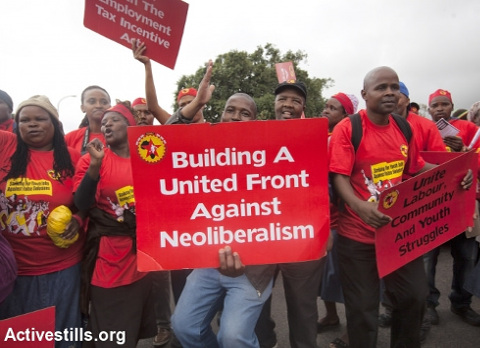
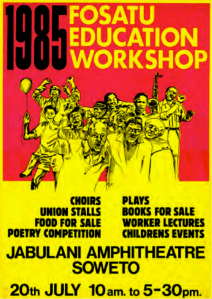 Trade unions have played a major role in defending workers’ rights against the bosses and politicians, also in advancing workers’ interests. This is why, even today, workers are still loyal to their unions. However, there are obstacles within the unions – one being the union bureaucracy, of paid and full-time officials. This can develop its own interests, undermining the unions.
 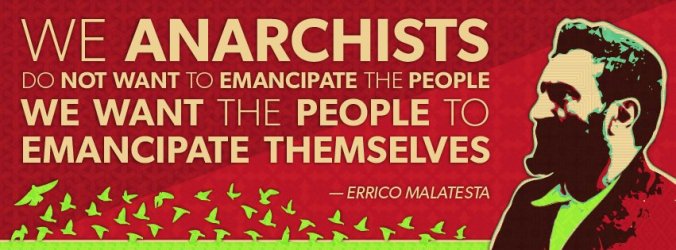 We, anarchists, are committed to building a society based on self-management and equality. We identify with the analyses and experiences of Mikhail Bakunin, who stated the need for freedom beyond the limited confines of “democracy” – where you are only free to vote on who is next to govern you. Bakunin argued that freedom comes responsibility: this included responsibility to others in the maintenance of this freedom. We need a society based on these principles; an anarchist society which expects from each according to their ability, and provides to each according to their needs.
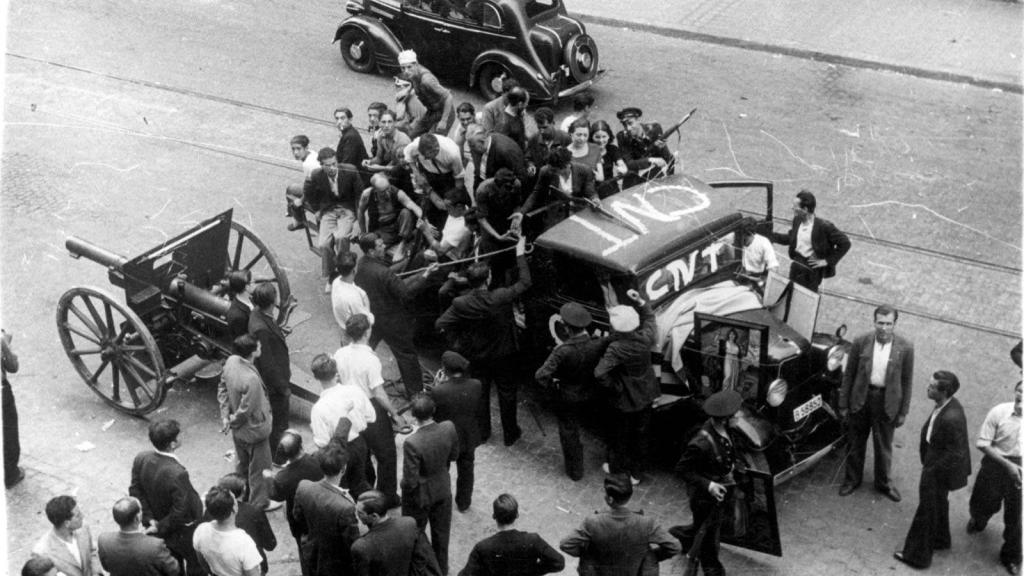
 Almost 80 years ago the peasantry and working class of Spain, inspired by anarchism and syndicalism, rose up to change the world. The Spanish Revolution of 1936-1939 involved millions creating, from below, a new society of freedom based upon equality and participatory democracy. Had the revolution succeeded and spread, the world would have changed forever. Rather than being trapped in decades of oppression and crisis and futility, humanity could have invested the last three generations into a universal human community of libertarian communism and scientific advance.
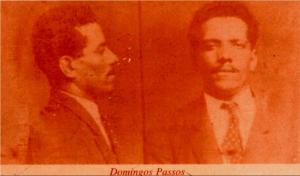 ‘I woke at 5.00 am. Passos, who had been up and about for hours, was sitting on his bed reading Determinism and Responsibility by Hamon. I grabbed a towel and went downstairs to wash my face. When I came back from the yard, after drying off, I saw two individuals. It was a moment or two before I realised who they were. With revolvers drawn they spoke to me and asked me harshly: “Where’s Domingos Passos?”Anticipating another of the attacks that our comrade had been through so often before, I was keen to cover for him and said that he was not around. I told them: “There’s no Domingos Passos living here!”
 As the 100th anniversary of the outbreak in August 1914 of World War One fades, let us remember that imperialism harms all working class people – including those in imperialist and Western countries, and the white working class.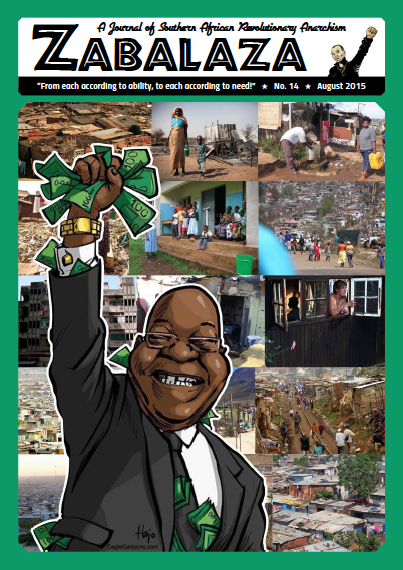
 zabalaza.net