Counterpower, Participatory Democracy, Revolutionary Defence: Debating Black Flame, Revolutionary Anarchism and Historical Marxism

by Lucien van der Walt
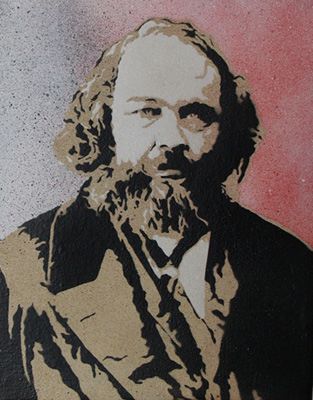
Our good mate Bakunin

This article responds to criticisms of the broad anarchist tradition in International Socialism, an International Socialist Tendency (IST) journal.[1] I will discuss topics such as the use of sources, defending revolutions and freedom, the Spanish anarchists, anarchism and democracy, the historical role of Marxism, and the Russian Revolution.

The articles I am engaging with are marked by commendable goodwill; I strive for the same. Paul Blackledge’s article rejects “caricatured non-debate”.[2] Ian Birchall stresses that “lines between anarchism and Marxism are often blurred”.[3] Leo Zeilig praises Michael Schmidt’s and my book,Black Flame: the Revolutionary Class Politics of Anarchism and Syndicalism, as “a fascinating account”.[4]

Continue reading

Take Back What’s Yours: the Mine-Line Occupation

by Shawn Hattingh (ZACF)

Forward to Worker Control

The economic crisis in South Africa has seen inequalities, and the forced misery of the working class, grow. While the rich and politicians have continued to flaunt their ill-gotten wealth, workers and the poor have been forced to suffer. It is in this context that the majority of the leaders of the largest trade unions have, unfortunately, elected to once again place their faith in a social dialogue and partnerships with big business and the state [2]. So while the state and bosses have been on the offensive against workers and the poor, union officials have been appealing to them to save jobs during the crisis. Not surprisingly, this strategy has largely failed. While union leaders and technocrats have been debating about the policies that should or should not be taken to overcome the crisis, bosses and the state have retrenched over 1 million workers in a bid to increase profits [3]. It is, therefore, sheer folly for union leaders to believe that the state and bosses are interested in compromise – without being forced into it. As seen by their actions, the elite are only interested in maintaining their power, wealth and lifestyles by making the workers and the poor pay for the crisis. For the elite, social dialogue is simply a tool to tie the unions up and limit their real strength – direct action by members. In fact, even before the crisis, social dialogue had been a disaster for the unions contributing towards their bureaucratisation and having abysmal results in terms of them trying to influence the state away from its pro-rich macro-economic policies [4].

Continue reading

The Kronstadt Rebellion: Still Significant 90 Years On

Over the last few years, many on the left have been trying to formulate a vision of socialism based on democracy. As a consequence countless papers and talks have been produced internationally about how socialism needs to be participatory if true freedom is to be achieved. Some have given this search for a form of democratic socialism evocative names, such as ‘Twenty-First Century socialism’, ‘socialism-from-below’ and ‘ecosocialism’. In South Africa the desire for a democratic socialism has also inspired initiatives such as the Conference for a Democratic Left (CDL); while even the South African Communist Party has outlined a need for a more participatory socialist agenda.

  • This text can be downloaded as a PDF pamphlet here

Continue reading

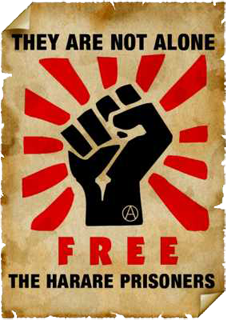
International Anarchist Statement in Solidarity with Zimbabwe’s Treason Trialists

Free the Harare PrisonersWhen Mohammed Bouazizi set himself alight he unwittingly ignited a wave of popular uprisings and rebellions that have spread like wildfire across North Africa and the Middle East, the heat of which can be felt as far afield as Zimbabwe where, on Saturday 19th February, 46 pro-democracy activists including students, workers and trade unionists were arrested in Harare. According to police documents they were arrested for plotting an Egypt-style revolt to overthrow Robert Mugabe, who has been in power since 1980, at a meeting to discuss the fall of Hosni Mubarak and events in North Africa and the Middle East.

The arrested, who represent the Zimbabwean Federation of Trade Unions (ZCTU), Zimbabwe National Students Union (ZNSU) and the International Socialist Organisation (ISO), had just watched documentary news footage on the uprising in Egypt and, according to state prosecutors, were there to “organise, strategise and implement the removal of the constitutional government of Zimbabwe … the Egyptian way”.

Continue reading

The “Democratic Left”: A Small Step Towards United Working Class Struggle

Statement by the Zabalaza Anarchist Communist Front (ZACF)

CDL logo

From 20 to 23 January 2011, working class and revolutionary militants from throughout South Africa, including a ZACF delegation, gathered in Johannesburg for the Conference of the Democratic Left (CDL). The gathering ended in the launch of the Democratic Left Front (DLF) as a loose alliance of organisations and individuals in struggle.

Plans for the CDL began in 2008, and over the years the ZACF has been cautiously involved in these discussions. We have had, and continue to have, reservations about the goals of many of the comrades involved in this process. At the same time, we can only welcome and support a project that is clearly deepening solidarity in struggle among some of the region’s most militant working class organisations (including both unions and community-based social movements). (See Declaration of the DLF).

In explaining our relationship to the DLF, we will here summarise our reservations, while explaining why they are outweighed by the genuine achievements of the CDL. The reservations cover three main areas: attitudes towards the state and elections; leadership structures; and the DLF programme and demands. (We are also less than enthusiastic about some new terms that have become popular in the CDL and DLF, such as “eco-socialism../”; but this is largely a matter of language, which we will not discuss in detail here.)

Continue reading

Solidarity with the Harare 52: Another dark day in Zimbabwe!

ZACF Statement in Solidarity with Arrested Zimbabwean Activists

Activists gathered in Harare on the 19th February in a closed meeting to discuss the recent uprisings in North Africa and the Middle East, were arrested after a planned police raid. Currently they are being held without charge and reports indicate that key members of the gathering are being subjected to physical assault by their captors. [Italiano] [Ελληνικά]

The ZACF strongly condemns yet another act of aggression against ordinary Zimbabweans seeking better alternatives to their current state of violent subjugation to the authority of the state and capital. In a clear show of force, the state and the predator ruling class has once again shown its desire to maintain power as the regulator of Zimbabwean society and will use violence and intimidation to achieve these ends. The present vicious attacks on protestors in Libya speak to this point as well. In any society the oppressed classes organized from below are the decisive forces to end regimes. The ruling classes in the state and capital are keenly aware of this and always seek to crush dissent.

Continue reading

LPM Members and shack-dwellers attacked in Protea South, Soweto

Solidarity Statement by the Zabalaza Anarchist Communist Front (ZACF)

The following is an urgent communication issued on behalf of, and in solidarity with the Landless Peoples Movement (LPM) and other shack-dwellers of Protea South, Soweto. It is based on information obtained by telephonic and face-to-face conversations held with LPM members following violent attacks against them last night. There still seems to be confusion, however, and details are sketchy. Updates on the situation will be made available as and when they are received, as will be any factual corrections.

On the evening of Sunday 23 May a group of men attempted to burn down the shack of Landless Peoples Movement chairperson Maureen Mnisi in the informal settlement of Protea South, Soweto. She was inside at the time, and was fortunate to escape with her life only because her son stumbled on the attackers and chased them away.

Continue reading

Resistance not Ballots: Mass Organisation not Authoritarian Leaders

Even with all eyes on the World Cup, movements of the workers and the poor in South Africa must not forget that another challenge looms: the local government elections of 2011. And with the approach of elections, we are already seeing the return of the wave of authoritarians and opportunists of the left, all singing the same old song: if they are elected, they will somehow be able to do something about the problems of the workers and the poor. And while they may remix the song over and over, the tune remains the same: individual leaders, experts, or vanguards can find the answer; the mass movements of the people cannot liberate themselves.

This is the one big lie of all who seek our votes.

Continue reading

Solidarity with the Greek workers’ struggle!

Statement on the Greek crisis
by Anarchist Communist organizations

Greece is a test case for the social dismantling that awaits us all. This policy is being enacted by all the institutional parties, by every government and by all of globalised capitalism’s institutions. There is only one way to hold back this policy of barbaric capitalism: popular direct action, to widen the strike movement and increase the number of demonstrations all across Europe.

Greek Uprising


Solidarity with the Greek workers’ struggle!

The Greek working class is angry, and with good reason, with the attempt to load responsibility for the bankruptcy of the Greek State onto their shoulders. We maintain instead that it is the international financial institutions and the European Union who are responsible. The financial institutions have plunged the world, and Greece in particular, into an economic and social crisis of historical proportions, forcing countries into debt, and now these same institutions are complaining that certain States risk not being able to repay their debts. We denounce this hypocrisy and say that even if Greece – and all the other countries – can repay the debt, they should not do so: it is up to those responsible for the crisis – the financial institutions, not the workers – to pay for the damage caused by this crisis. The Greek workers are right to refuse to pay back their country’s debt. We refuse to pay for their crisis!

Continue reading

Terre’Blanche is Dead; Long Live the Workers!

We in the Zabalaza Anarchist Communist Front will shed no tears for the killing of the racist Eugene Terre’Blanche. Why should revolutionary workers lament the death of a thug who lived in nostalgia for the days when his emulation of Hitler and (empty) threats of war shook the whole country, and who never ceased to exploit and terrorise the black workers on a farm that should rightly be managed by those who work it to meet the needs of all and not be the property of any one single person?

Nor can we join with the capitalist newspapers who link the Terre’Blanche killing to “heightened racial tension in South Africa”, nor with the politicians of the Democratic Alliance and the Congress of the People who attribute the killing to the ANC’s Julius Malema and the “kill the boer” song. Not that we have any wish to defend Malema, any more than any other opportunistic capitalist politician of any party. Whether – like so many others – he is deliberately seeking to shift blame onto “the whites” so black workers won’t challenge his own crookery, or whether he is simply trying to identify himself with “the struggle” in his latest attempt at self-glorification by fake radicalism, Malema’s goal in singing this song is clearly self-advancement, and not any fight against racism or any other form of oppression. After all, even if we leave aside the broader capitalist programme of the ANC government and focus only on the question of white farmers, surely the main goal must be, not to kill them, but to redistribute “their” land to those who work it, or are prepared to work it. And here Malema’s government has been all talk and no action: even the pitiful target of 30 percent land redistribution is nowhere near being met. Just one example of the government’s true loyalties: the interests of the ruling class come first.

Continue reading