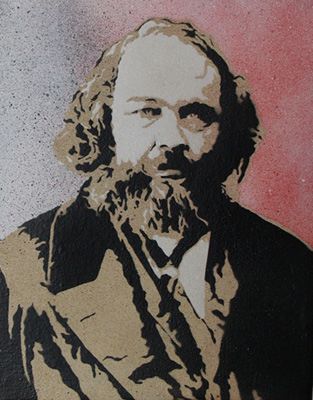
Worker Co-operatives, Markets and the South African State: An analysis from an Anarchist Perspective

by Oliver Nathan (ZACF)

Introduction

Worker co-operatives in post apartheid South Africa have all too often been championed by certain sections of the labour movement and some on the left as part of the solution to the ‘structural unemployment’ facing the popular classes in the current dispensation.  Moreover, and often framed in purely ideological, often Proudhonist terms (in particular from the SACP and from various ex SACP members); worker co-operatives are understood as an equitable way of organizing production so that workers have control over the labour process, on the one hand, and ownership of the means of production, on the other.

Sarmcol Workers T-shirt Printing Co-op

Certain ‘enabling’ legislation and policy such as the Co-operatives Act of 2005, the National Co-operatives Policy of 2007 and the national Department of Trade and Industry (DTI) stepping in as the ‘custodian’ of co-operative development South Africa has, at least on paper, meant that co-operatives are part of the national development agenda currently embodied by the New Growth Plan (NGP) policy framework.[1] However, if one does some research into how various co-operative development projects, including trade union, state initiated, and community initiated and worker occupation-type co-operatives have fared in the post-apartheid era, one would see the dismal performance of these co-operatives in relation to their original objectives. These are, in particular, providing sustainable employment for their members while at the same time maintaining member control and popular participation in administration and production.

This article seeks to tease out some of the pitfalls of organizing worker co-operatives trying to compete in the market and often with the ‘assistance’ of the state. The benefits and limitations of co-operatives have long been the topic of discussion amongst anarchists and other libertarian socialists. This paper draws on the ideas of Bakunin (as against Proudhon) around the question of how co-operatives relate to and are affected by the state and the market in capitalist society. It subsequently evaluates the realities faced by co-operatives operating in the market through an analysis of ‘worker control’ and ‘social ownership’ in the former Yugoslavian co-operatives and ‘degeneration of worker control’ in the Mondragon Co-operative Complex in Spain. We then move onto the Ekurhuleni Metropolitan Municipality’s state sponsored co-operative development project as the South African case study.


Continue reading

What Anarchism and Syndicalism offer the South African Left

Lucien van der Walt

The 21st century is a time of both despair and hope: despair at the evils of contemporary society, hope that a new world is possible.

The ideas of the broad anarchist tradition can contribute greatly to this new world. They are integrally tied to an inspiring body of practice in working class, anti-capitalist, anti-imperialist and civil rights struggles, back to the 1860s. And they are relevant to South Africa today.

Aims

Anarchism’s basic aim is the most complete realisation of a revolutionary democratic vision, abolishing hierarchy and exploitation:

  • ending social and economic inequality, including by race, nation and gender, to create a society based on free, cooperating individuals;
  • revolutionary reconstruction of the family as a site of freedom and cooperation;
  • participatory-democratic control of the means of production, coercion and administration, through multi-tendency worker/ community councils, not corporations and states; and,
  • self-management at work, global economic participatory planning, and distribution on the basis of need, not markets.

Continue reading

Picking Up the Slack in Waste Collection and Ecological Protection: the Struggle of Recyclable Waste Pickers in Uruguay and Brazil

by Jonathan Payn (ZACF)

Across South America there is a growing movement – assuming different forms and characteristics, but with similar origins, demands and objectives – that, despite it being located at a strategically important intersection between two critical social issues – class struggle and ecology – seems to me to have received little attention in South African academic and activist circles. And this is true despite the fact that the social and economic conditions that gave rise to this movement prevail in South Africa, as they did – and continue to – in many South American countries. Perhaps this is due to the fact that this movement concerns people largely marginalised by industrial society and so-called ‘brown’ ecological issues – such as the pollution and contamination of rivers and dams surrounding poor communities, most acutely effecting the workers and poor – as opposed to the much more sanitary ‘green’ ecological issues – such as conservation and animal welfare – often associated, in South Africa at least, with liberal white activists from the middle and upper classes [1].

This is the movement of the catadores, as they are known in Brazil, and clasificadores in Uruguay; the recyclable waste pickers and sorters who, similarly to South Africa, constitute a growing informal sector in the industrial production cycle. This includes all people – not formally employed by public or private waste management services – who collect, transport, classify and sell recyclable waste for a living – or ‘work with scrap’ – thus “reducing demand for natural resources and reducing greenhouse gas emissions” [2]. A category of work which, according to the World Bank, is performed by 15 million people globally – or one percent of the world population [3] – and has become increasingly common in South Africa in recent years.

Continue reading

Build a Better Workers’ Movement: learning from South Africa’s 2010 mass strike

Lucien van der Walt and Ian Bekker

The biggest single strike since the 1994 parliamentary transition in South Africa showed the unions’ power. It won some wage gains, but it threw away some precious opportunities. We need to celebrate the strike, while learning some lessons:

  • the need for more union democracy
  • the need to use strikes to link workers and communities
  • the need for working class autonomy
  • the need to act outside and against the state
  • the need to review our positions: against the Tripartite Alliance, for anarcho-syndicalism

Continue reading

Why May Day Matters: History with Anarchist Roots

May Day MartyrsWhen we celebrate May Day we seldom know or reflect on why it is a holiday in South Africa and in many parts of the world. Sian Byrne, Warren McGregor and Lucien van der Walt tell the story of powerful struggles that lie behind its existence and of the organisations that both created it and kept its meaning alive.

Faced with neo-liberal globalisation, the broad working class movement is being forced to globalise-from-below. Working class internationalism is nothing new; we need to learn from the past.

  • Download this text as a PDF leaflet here

May Day or international workers day started as a global general strike to commemorate five anarchist labour organisers executed in the United States in 1887. Mounting the scaffold, August Spies declared: ‘if you think that by hanging us, you can stamp out the labor movement – the movement from which the downtrodden millions, the millions who toil and live in want and misery –the wage slaves – expect salvation – if this is your opinion, then hang us! Here you will tread upon a spark, but there, and there, and behind you and in front of you, and everywhere, flames will blaze up. It is a subterranean fire. You cannot put it out.’

Continue reading

Andries Tatane: Murdered by the Ruling Classes

sabc/police
Images of the footage screened by the SABC, April 13 2011

by Shawn Hattingh (ZACF)

On the 13th April, people in South Africa were stunned. On the evening news the sight of six police force members brutally beating a man, Andries Tatane, to death was aired. The images of the police smashing his body with batons and repeatedly firing rubber bullets into his chest struck a cord; people were simply shocked and appalled. Literally hundreds of articles followed in the press, politicians of all stripes also hopped on the bandwagon and said they lamented his death; and most called for the police to receive appropriate training to deal with ‘crowd control’ – after all, elections are a month away.

Andries Tatane’s death was the culmination of a protest march in the Free State town of Ficksburg. The march involved over 4,000 people, who undertook the action to demand the very basics of life – decent housing, access to water and electricity, and jobs. They had repeatedly written to the mayor and local government of Ficksburg pleading for these necessities. Like a group of modern day Marie Antoinettes, the local state officials brushed off these pleas; more important matters no doubt needed to be attended to – like shopping for luxury cars; banking the latest fat pay check; handing tenders out to Black Economic Empowerment (BEE) connections and talking shit in the municipal chambers. Therefore, when the township residents had the audacity to march, and call for a response, the police were promptly unleashed with water cannons and rubber bullets. If the impoverished black residents of Ficksburg could not get the hint, in the form of silence; then the state and local politicians were going to ensure that they got the message beaten into them.

Continue reading

Counterpower, Participatory Democracy, Revolutionary Defence: Debating Black Flame, Revolutionary Anarchism and Historical Marxism

by Lucien van der Walt

Our good mate Bakunin

This article responds to criticisms of the broad anarchist tradition in International Socialism, an International Socialist Tendency (IST) journal.[1] I will discuss topics such as the use of sources, defending revolutions and freedom, the Spanish anarchists, anarchism and democracy, the historical role of Marxism, and the Russian Revolution.

The articles I am engaging with are marked by commendable goodwill; I strive for the same. Paul Blackledge’s article rejects “caricatured non-debate”.[2] Ian Birchall stresses that “lines between anarchism and Marxism are often blurred”.[3] Leo Zeilig praises Michael Schmidt’s and my book,Black Flame: the Revolutionary Class Politics of Anarchism and Syndicalism, as “a fascinating account”.[4]

Continue reading

Take Back What’s Yours: the Mine-Line Occupation

by Shawn Hattingh (ZACF)

Forward to Worker Control

The economic crisis in South Africa has seen inequalities, and the forced misery of the working class, grow. While the rich and politicians have continued to flaunt their ill-gotten wealth, workers and the poor have been forced to suffer. It is in this context that the majority of the leaders of the largest trade unions have, unfortunately, elected to once again place their faith in a social dialogue and partnerships with big business and the state [2]. So while the state and bosses have been on the offensive against workers and the poor, union officials have been appealing to them to save jobs during the crisis. Not surprisingly, this strategy has largely failed. While union leaders and technocrats have been debating about the policies that should or should not be taken to overcome the crisis, bosses and the state have retrenched over 1 million workers in a bid to increase profits [3]. It is, therefore, sheer folly for union leaders to believe that the state and bosses are interested in compromise – without being forced into it. As seen by their actions, the elite are only interested in maintaining their power, wealth and lifestyles by making the workers and the poor pay for the crisis. For the elite, social dialogue is simply a tool to tie the unions up and limit their real strength – direct action by members. In fact, even before the crisis, social dialogue had been a disaster for the unions contributing towards their bureaucratisation and having abysmal results in terms of them trying to influence the state away from its pro-rich macro-economic policies [4].

Continue reading

The Kronstadt Rebellion: Still Significant 90 Years On

Over the last few years, many on the left have been trying to formulate a vision of socialism based on democracy. As a consequence countless papers and talks have been produced internationally about how socialism needs to be participatory if true freedom is to be achieved. Some have given this search for a form of democratic socialism evocative names, such as ‘Twenty-First Century socialism’, ‘socialism-from-below’ and ‘ecosocialism’. In South Africa the desire for a democratic socialism has also inspired initiatives such as the Conference for a Democratic Left (CDL); while even the South African Communist Party has outlined a need for a more participatory socialist agenda.

  • This text can be downloaded as a PDF pamphlet here

Continue reading

Towards a History of Anarchist Anti-Imperialism

“In this struggle, only the workers and peasants will go all the way to the end”

The anarchist movement has a long tradition of fighting imperialism. This reaches back into the 1860s, and continues to the present day. From Cuba, to Egypt, to Ireland, to Macedonia, to Korea, to Algeria and Morocco, the anarchist movement has paid in blood for its opposition to imperial domination and control.

However, whilst anarchists have actively participated in national liberation struggles, they have argued that the destruction of national oppression and imperialism can only be truly achieved through the destruction of both capitalism and the state system, and the creation of an international anarcho-communist society.

This is not to argue that anarchists absent themselves from national liberation struggles that do not have such goals. Instead, anarchists stand in solidarity with struggles against imperialism on principle, but seek to reshape national liberation movements into social liberation movements.

Such movements would be both anti-capitalist and anti-imperialist, would be based on internationalism rather than narrow chauvinism, would link struggles in the imperial centres directly to struggles in the oppressed regions, and would be controlled by, and reflect the interests of, the working class and peasantry.

In other words, we stand in solidarity with anti-imperialist movements, but condemn those who use such movements to advance reactionary cultural agendas (for example, those who oppose women’s rights in the name of culture) and fight against attempts by local capitalists and the middle class to hijack these movements. We oppose state repression of anti-imperialist movements, as we reject the right of the state to decide what is, and what is not, legitimate protest. However, it is no liberation if all that changes is the colour or the language of the capitalist class.

Continue reading