 by Shawn Hattingh (ZACF)
It has become common knowledge that South Africa is the most unequal country in the world. Only 41% of people of working age are employed, while half of the people employed earn less than R 2 500 a month [1]. Worse still, inequality is growing with wages as a share of the national income dropping from 50% in 1994 to 45% in 2009; while profit as a share of national income has soared from 40% to 45% [2]. In real terms this means that while a minority live well – and have luxurious houses, swimming pools, businesses, investments, and cushy positions in the state – the majority of people live in shacks or tiny breezeblock dwellings, are surrounded by squalor, and struggle on a daily basis to acquire the basics of life like food and water. Likewise, while bosses, state managers, and politicians – both black and white – get to strut around in fancy suits barking orders; the majority of people are expected to bow down, do as told, and swallow their pride.
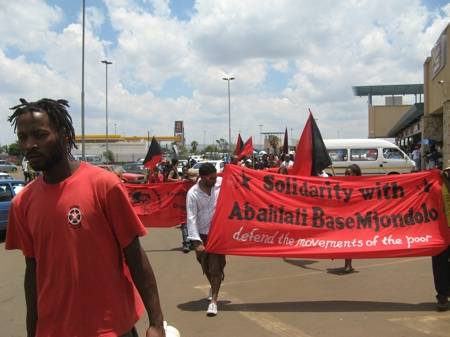
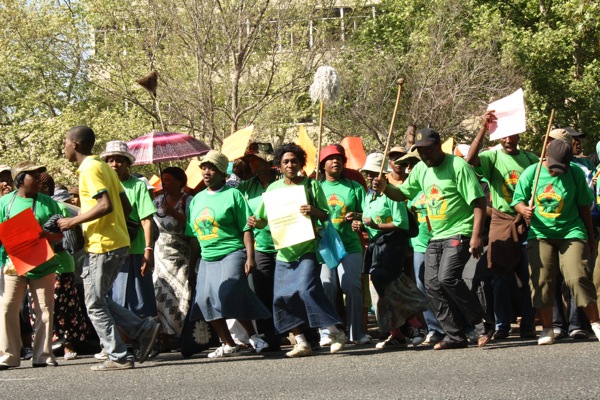
Despite being expected to be subservient, however, protests in working class areas are spreading. People have become fed up with being unemployed, having substandard housing, suffering humiliation, and having their water and electricity cut off. In fact, per person South Africa has the highest rate of protests in the world [3]. It is in this context of growing community direct action, even if still largely un-coordinated, that the state has felt it necessary, at least on a rhetorical level, to declare its intentions to lead a fight against unemployment and reduce inequality. To supposedly do so it unveiled a new economic framework, The New Growth Path (NGP), late in 2010 with the declared aim of creating 5 million jobs by 2020 [4].
Continue reading →
 by Shawn Hattingh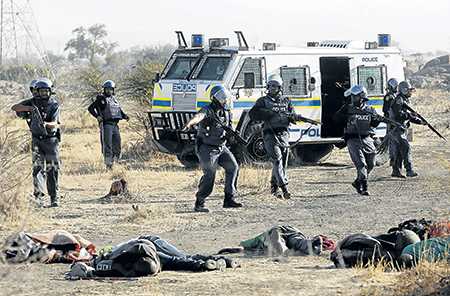
 Introduction
 Once again much media fanfare has broken out in aftermath of the South African state’s budget speech. The budget, however, is yet more proof of the ANC’s ruling class agenda: free markets, budget cuts for the poor and subsidies for the rich. From the budget and other utterances it is clear the ANC has, despite media hysteria, no interest in nationalisation. The state will, therefore, try and deal with the global economic crisis largely through business-as-usual.


 zabalaza.net