 Twenty-five years into democracy the black working class majority in South Africa has not experienced any meaningful improvements in its conditions. The apartheid legacy of unequal education, healthcare and housing and the super-exploitation of black workers continues under the ANC and is perpetuated by the neoliberal policies it has imposed.
The only force capable of changing this situation is the working class locally and internationally. Yet to do so, struggles need to come together, new forms of organisation appropriate to the context are needed; and they need both to be infused with a revolutionary progressive politics and to learn from the mistakes of the past.
Outside the ANC alliance, there have indeed been many efforts to unite struggles – but these have largely failed to resonate with the working class in struggle and form the basis of a new movement. Nowhere is this more evident than with the newly-formed Socialist Revolutionary Workers Party (SRWP) – which got less than 25 000 votes in the national elections, despite the fact that the union that conceived it, Numsa, claims nearly 400 000 members.

 The question of state government elections and running a Workers or Socialist political party continues to be raised in the working class movement and the Left globally. As we may know, there was excitement about the rise of Jeremy Corbyn in the Labour Party in Britain, left political parties in certain parts of Europe and Latin America and, more recently, certain shifts to more centrist positions in the United States amongst a section of the Democratic Party calling themselves “Democratic Socialists”. In South Africa, many workers and some activists seem cautiously optimistic by NUMSA’s formation of the Socialist Revolutionary Workers Party that will seek to participate in the 2019 general elections.
 Selby Semela, a leading figure in the 1976 revolt against apartheid, political exile, and author (with Sam Thompson and Norman Abraham), of “
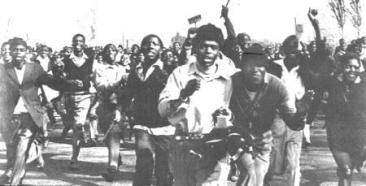 his is a 1979 Situationist-influenced text describing the mass student and worker protests that, in 1976 and 1977, shook apartheid South Africa with mass protests and general strikes. Written by two exiled black South Africans — Norman Abraham and Selby Semela, a leading figure in “76” — and an American revolutionary — Sam Thompson — the text is critical of heirarchical, nationalist and vanguardist modes of struggle, and affirms, instead, “the real black proletarian struggle in South Africa”. We do not endorse its every word, but we are republishing it, in honour of Semela who recently
 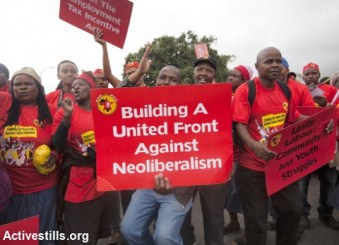 A call for socialist Left unity is heard widely today in South Africa, but is usually taken as a call for unity of praxis (unity in theoretical programme and action). This is sometimes framed as transcending old divides (these seen as outdated, divisive or dismissed as dogmatic), and sometimes as unity in order to have action (rhetorically set up as the opposite of “arm chair” theory).
 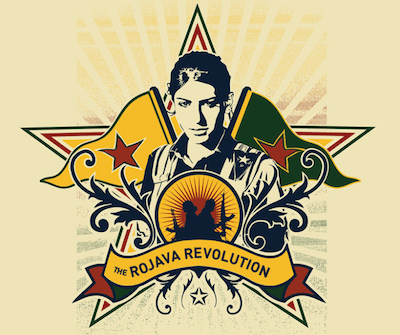 In this education series we look at experiments, which have arisen through working class struggles, to create alternatives to capitalism. This will include looking at present and past alternatives to capitalism. In doing this, we are not saying these experiments should be carbon copied – they have often taken place in very different times and contexts.
 On 17 November 2017, the Minister of Labour announced the state intends to carry out a new round of attacks on workers and their rights. The attacks come in the form of three Labour Bills currently being considered by parliament: the Basic Conditions of Employment Bill, the National Minimum Wage Bill and the Labour Relations Amendment Bill. If passed, the changes to the labour laws these bills propose will be a major attack on workers’ rights, won through decades of struggle, and will further deepen and entrench inequality and roll back important democratic gains.
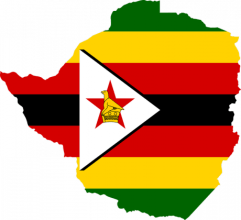 It’s been around 100 days since the birth of a “new” Zimbabwe. It’s been around a 100 days since 37 years of authoritarian rule by Robert Mugabe – Head of State since 1980 – finally came to an end. Zimbabwe has a new President, Emmerson Mnangagwa, who gained power through a soft military coup against Mugabe, and his chosen successor, Grace Mugabe. And recently, Zimbabwe mourned the death of former Prime Minister of Zimbabwe, Morgan Tsvangirai: an opposition leader, he came from the trade unions, and spent most of his life fighting against Mugabe.
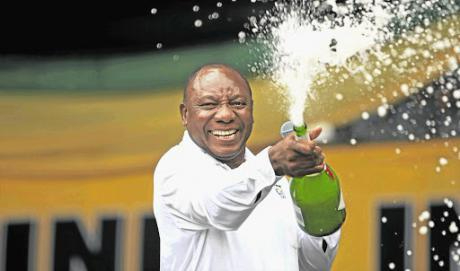 In South Africa, for white and international capital the last few weeks have been a period of rejoicing due to Ramaphosa being elected as ANC President. The slate that Ramaphosa won on was the promise to eradicate corruption within the state and the ANC. The reality is that the battle within the ANC and now Zuma’s total demise has very little to do with addressing corruption – despite Ramaphosa’s claims.
 zabalaza.net