Syria: The life and work of anarchist Omar Aziz, and his impact on self-organization in the Syrian revolution

By Leila Shrooms for Tahrir-ICN

syria-sos-omar-aziz-homs-free-congregation-17-2-2013

Omar Aziz (fondly known by friends as Abu Kamal) was born in Damascus. He returned to Syria from exile in Saudi Arabia and the United States in the early days of the Syrian revolution. An intellectual, economist, anarchist, husband and father, at the age of 63, he committed himself to the revolutionary struggle. He worked together with local activists to collect humanitarian aid and distribute it to suburbs of Damascus that were under attack by the regime. Through his writing and activity he promoted local self-governance, horizontal organization, cooperation, solidarity and mutual aid as the means by which people could emancipate themselves from the tyranny of the state. Together with comrades, Aziz founded the first local committee in Barzeh, Damascus.The example spread across Syria and with it some of the most promising and lasting examples of non-hierarchical self organization to have emerged from the countries of the Arab Spring.

Continue reading

Tahrir-ICN statement on events in Egypt

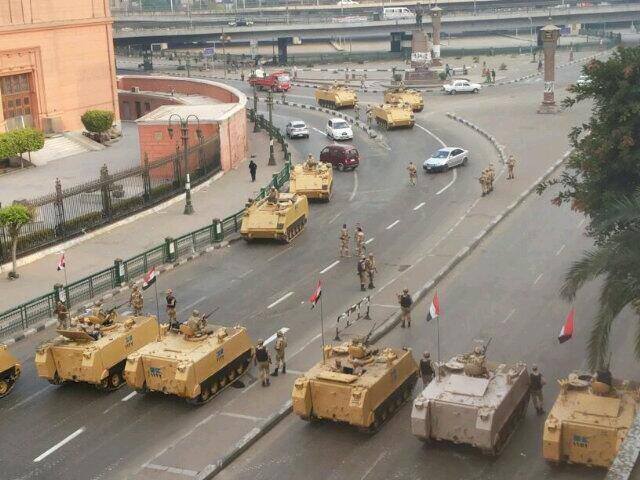
The events of the past couple of days are the latest step in a sequence of events by which the military can consolidate its hold on power, aim towards the death of the revolution and a return to a military/police state.

The authoritarian regime of the Muslim Brotherhood had to go. But what has replaced it is the true face of the military in Egypt – no less authoritarian, no less fascist and for sure more difficult to depose.

egipto

Continue reading

The System of Voting for Leaders is Killing Us

Voting copiaby Lekhetho Mtetwa
(Tokologo African Anarchist Collective)

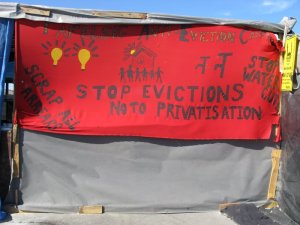
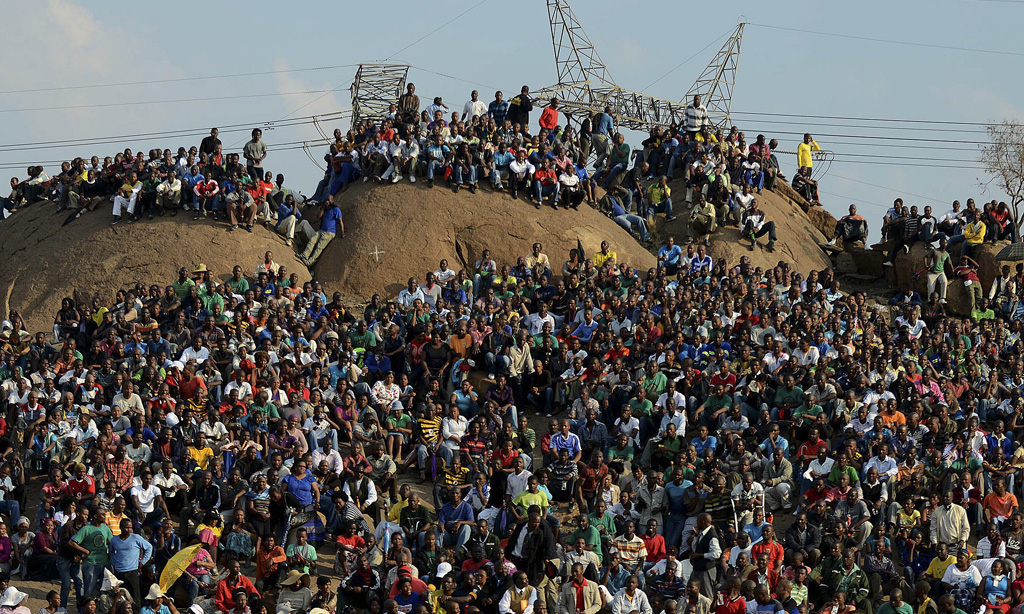
It is clear that the rights of the working class and poor people on the ground are not recognised by those in power, and will never be. After the 1994 elections, ordinary people thought that they will feel and enjoy real democracy. But to their surprise, things didn’t work the way they thought. People are being demoralised, threatened and killed when they stand up. It is now difficult for people to exercise their democratic rights.

It’s clear that voting won’t bring any change in people’s lives. The whole system is run by a small ruling class.  Voting does not change the system. By voting we are just fooling ourselves about our rights. People voted in 1994  because they thought their votes will bring complete changes in their lives. No one thought of suffering after voting in the first elections. Promises were made by so-called leaders in order to be voted into power. Their promises were a big lie.

Continue reading

The “Brand Mandela” Steamtrain Rolls On

by  Tina Sizovuka
(Tokologo African Anarchist Collective)
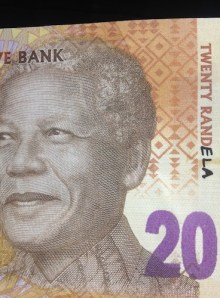
RandelaNelson Mandela has become a brand, “Brand Mandela,” his image, name and prison number used to generate cash and to promote the legend of Mandela. In July 2012, for example, the 46664 clothing line was launched (all “Made in China”).

But “Brand Mandela” is more than just an opportunity to sell stupid trinkets to tourists and celebrities. It is also a dangerous myth, based on Mandela-worship, promoted daily in the public imagination to serve far more sinister interests.

The myth of Mandela is used to give the vicious South African ruling class credibility by association, and to legitimise the the ruling African National Congress (ANC). It is no surprise that the 2012 launch of the new “Randelas” – South Africa’s new set of banknotes, with Mandela on – coincided with the ANC’s national conference at Manguang.  Continue reading

South Africa’s rulers have blood on their hands

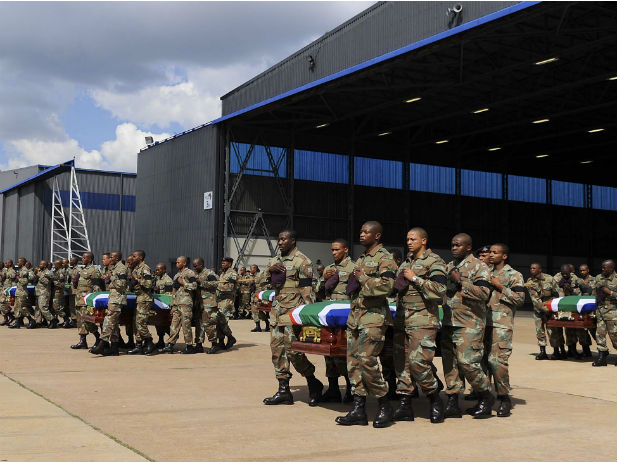
Members of the SANDF carry the mortal remains of 13 members that were killed in Central African Republic (CAR) during the handing over to the respective families at the Waterkloof Air Force Base, in Pretoria, March 28 (Reuters)

Members of the SANDF carry the mortal remains of 13 members that were killed in Central African Republic (CAR) during the handing over to the respective families at the Waterkloof Air Force Base, in Pretoria, March 28 (Reuters)

Many people in South Africa were shocked by the death of at least 13 South African National Defence Force (SANDF) troops when rebels overran their base in the capital of the Central African Republic (CAR). Amongst the public and within the media questions soon started arising around the possible reasons why troops were in CAR to begin with. When it emerged that troops were possibly partly deployed to protect businesses in CAR linked to top African National Congress (ANC) officials, there was widespread outrage. The fact that South African troops were involved in protecting the political and economic interests of wealthy people linked to the South African state in CAR, and other African countries, should perhaps, however, not come as a surprise. Throughout its history, whether during apartheid or post apartheid, the South African state – which is controlled by the ruling class and headed up by members of this class – has been most willing to deploy troops in parts of Africa to protect the political, economic and strategic interests of the South African ruling class.  Continue reading

Egypt: In response to the indictments in Alexandria

Statement by the Egyptian Libertarian Socialist Movement

egyptLast Sunday, during the Alexandria court hearing which was to pronounce a verdict on police officers accused of killing protesters during clashes in January 2011, the police in charge of guarding the court began to provoke the victims’ families and activists who had come to support them peacefully as they had done for previous hearings.

Continue reading

Mali: Areva is well worth a war

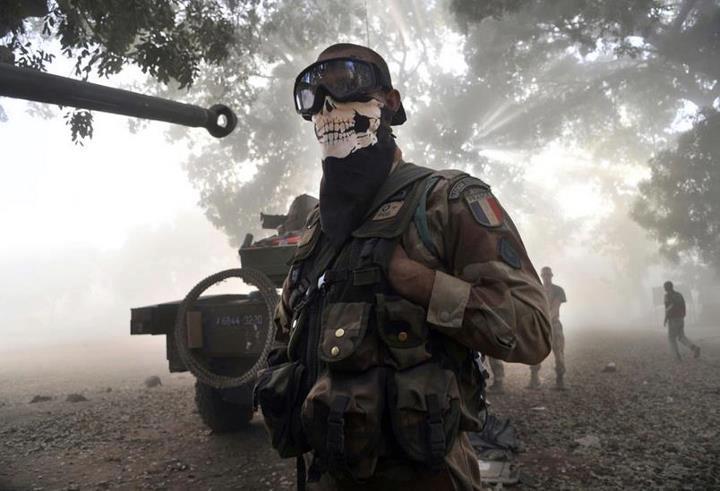
208411_10152411959800034_1947572038_nYou thought French Africa was a thing of the past? It most certainly is not, and despite Hollande’s rhetoric on this issue, as on many others, the Socialist Party and the UMP are like Tweedledum and Tweedledee.

“France has no interest in Mali”, declared François Hollande to the press on 16 January. “It is merely at the county’s service.” Like it? France has no interest in the Sahel region? Not even in the uranium mines in Niger, operated by Areva [1] to supply French nuclear power plants?

Continue reading