Alternatives to Capitalism: 1936 – Rise and Fall of the Spanish Revolution

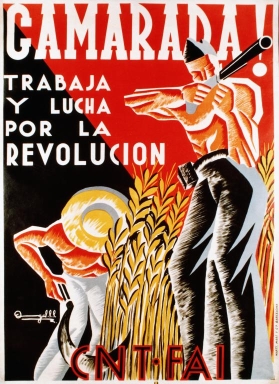
1936 - 4 smallerIn this edition of the Education Series we look at one of the greatest experiments with an alternative to capitalism: the 1936 Spanish Revolution. People today seeking a democratic socialist and egalitarian society can draw lessons from both its successes and failures.

The Spanish Revolution occurred in the context of a civil war, but even so for a short period of time social relations changed – bosses were fired; workers practiced direct democracy in the fields and factories; greater gender equality was won; and socialism from below looked like a possibility.
Continue reading

South Africa: Minimum wages can’t end suffering when the rich abuse the poor

There has been a lot of talk about the promise of a National Minimum Wage (NMW) in South Africa. This means wages cannot go below a certain level. But capitalists and politicians continue to eat the food of the workers, the poor and unfortunate. Why? In some cases, the NMW is an improvement – but generally, the NMW is not a “living wage,” meaning a wage on which you can live a decent life. Prices keep going up. This society is based on the maximization of profit, this is its logic, and this means wages are not linked to what the workers and poor need, but to what bosses and politicians need. Wages are a system of exploitation. We live a capitalist society of stress and fear and jealousy, rooted in a system of cheap black labour, and power and profits for the bosses and politicians. We need to fight for something more, take back our unions, and lay the groundwork for an anarchists society, with equality based on workers and community councils.

Continue reading

Resist-Occupy-Produce: What can Anarchists and Syndicalists Learn from Factory Take-Overs and Worker Cooperatives in Argentina?

The remarkable “recovered factories” movement (seen in films like “The Take”) shows hundreds of closed factories reopened by workers, run democratically, creating jobs and helping communities. It shows there is only so much protesting can accomplish – you have to create something new. But it also shows that such alternative sites of production must be embedded in other popular class movements, and that unions and social movements must systematically develop alternatives to capitalist- and state- run social services and media. It is, however, simply impossible to escape capitalism by creating cooperatives – it is essential to build a mass revolutionary front aiming at complete socialisation of the economy and of decision-making through a revolutionary rupture.

Continue reading

Bakunin for Anti-Imperialists

Bakunin for Anti-Imperialists by Arthur Lehning

Click image to download PDF

by Arthur Lehning

On imperialism itself, [Mikhail] Bakunin [1814-1876] has nothing specifically to say. That is not strange, because imperialism in its modern form had not yet appeared; besides, opposition to imperialism by a revolutionary is a rather obvious thing. But I think Bakunin’s writings can be useful to anti-imperialists in several ways. Firstly, on account of the general view held by Bakunin about the essence of the revolutionary struggle and his conceptions about federalism and the state. Secondly on account of his activities in the eighty forties.

As far as the last point is concerned, it is clear that I don’t wish to stress it too much. All historical parallels can be abusive. However, it is not abusive to point out the similarities between various kinds of Nineteenth Century nationalism and anti-imperialism in our time. This is not only because a great deal of today’s anti-imperialist fight is carried out on nationalist platforms, but also on account of the intensity with which the banner of then and that of today monopolise the attention of men with radical consciousness. In this respect, Bakunin has important things to say.
Continue reading

“Superintendent Officer Mthembu” – Spoken Word Poetry against Police Brutality

Inspired by the Events of 28th September 2016 –
Police Shooting on RU students.

“Superintendent Officer Mthembu”

by Leroy Maisiri (ZACF)

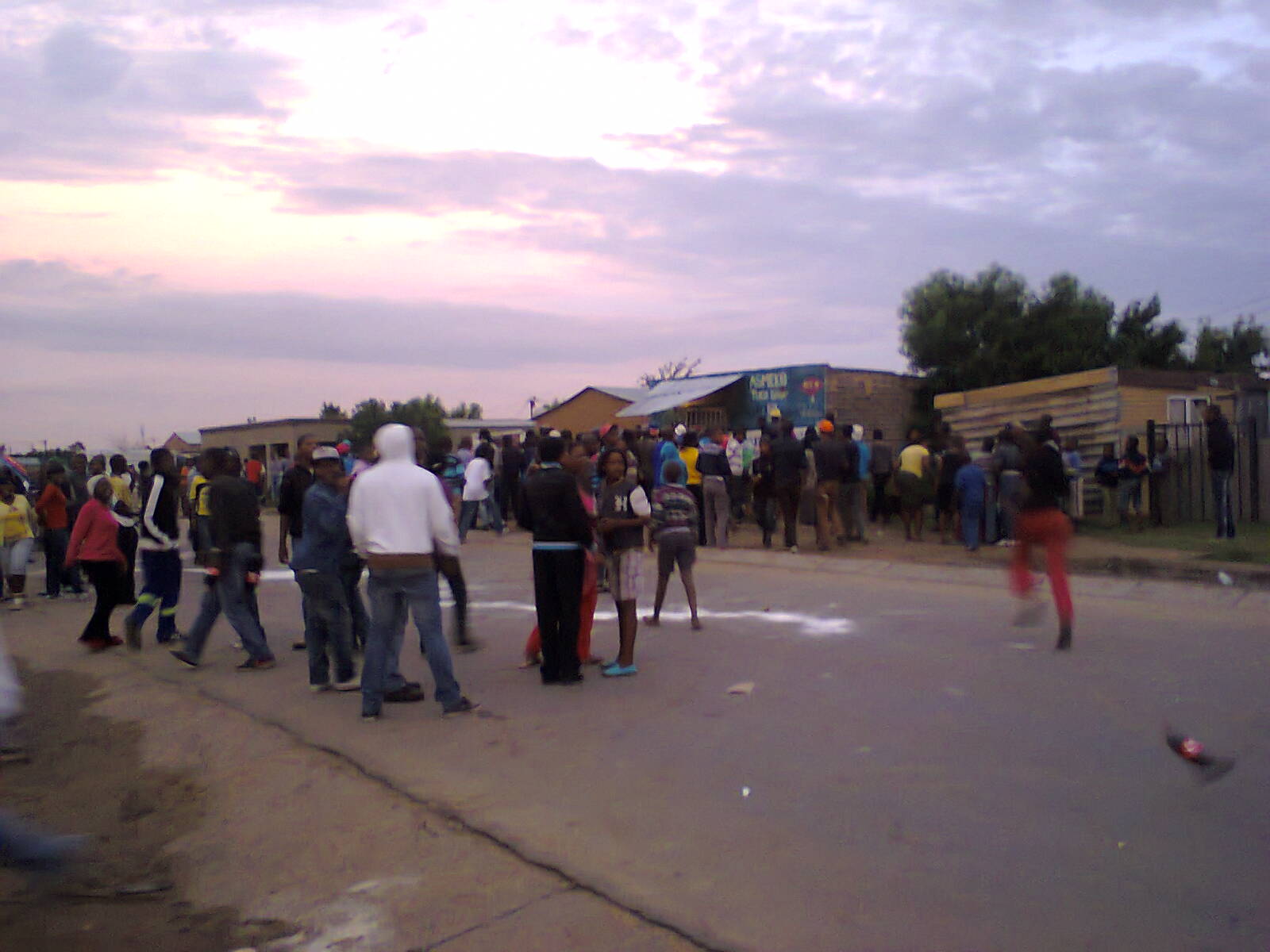
cops-rhodesIf our pain was turned into an art museum the most popular exhibit would showcase portraits of the South African Police Service with our bodies on the floor as their footstools. Our silenced screams chock up the airways in our throats, our tracheas burst out and with both hands we grab the artery veins in an attempt to contain the bleeding, trying to redirect this blood, this life back into the cause and yes, bang, bang, bang; you keep shooting and yes bang, bang, bang, we keep running.

But please first allow me to start this poetic prose in Joza extension 7, the peripheral of the township itself almost excommunicated from the centre of Grahamstown. Somewhere unclearly mapped by angry ground stones who share their space with the kind of dust that does not easily settle well on the road, is what looks like an afterthought of an RDP house. In it is Superintendent Officer Mthembu. A child of the working class. Mthembu on his tea breaks always jokes about how he wanted to be a lawyer, most of his stories start with the words “and during the apartheid…” he would recall those memories so well, remembering quite clearly all the fights, the protests, the revolutionary climate that engrossed South Africa. His stories would also always end with “…if only I could afford the fees in ’94, I would have been a qualified lawyer like Madiba”.

Continue reading

Inside the Zimbabwean Uprising

MC Biko, ZACF

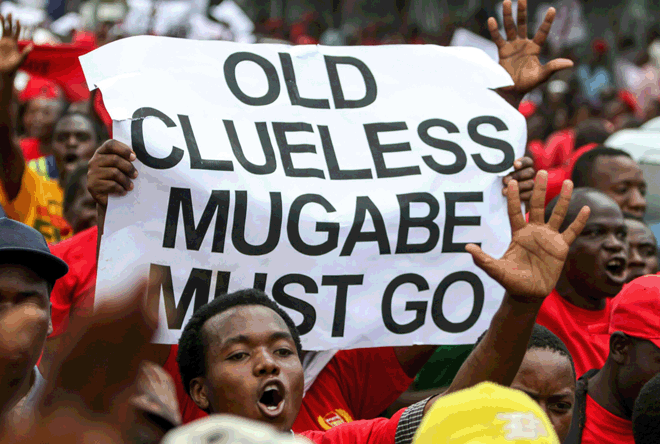
Anti-Robert Mugabe protesters in Harare, Zimbabwe

Anti-Robert Mugabe protesters in Harare, Zimbabwe

A year and half ahead of the 2018 general elections, the poor and working people of Zimbabwe are up in arms against President Robert Gabriel Mugabe and his ZANU-PF regime which has been in power for 36 years. In the last 3 months Zimbabwe has been shaken by protest actions of workers, informal traders, commuter omnibus operators, and unemployed youths. These actions have occurred at a time when the country is experiencing a liquidity crisis and the ruling party structures are crumbling from within as liberation war veterans, once Mugabe’s staunch loyalists, break ranks from the regime. Meanwhile, the opposition political parties (a myriad of MDC splinter groups and two ZANU-PF splinter groups) are in talks to form a coalition party. The regime has since stepped up its repressive measures in a bid to squash dissent.

Continue reading