 The question of state government elections and running a workers or socialist political party continues to be raised in the working-class movement and the Left globally. As we may know, there was excitement about the rise of Jeremy Corbyn in the Labour Party in Britain, about the successes of left political parties in certain parts of Europe and Latin America and, more recently, certain shifts to more centrist positions in the United States amongst a section of the Democratic Party calling themselves “Democratic Socialists.” In South Africa, many workers and some activists seem cautiously optimistic about NUMSA’s formation of the Socialist Revolutionary Workers Party that participated in the 2019 general elections, but did not manage to get a seat in Parliament.
With this in mind, we need to look at issues of social transformation within the framework of what we want to achieve and the relationship between the means and ends of struggle in pursuit of these aims. The historic and ultimate socialist end is a society characterised by collective democratic control of the political and economic systems and one without class divisions and oppression of any kind – in real terms, a society without the state and capitalism in particular.
If this is so, is this revolutionary transformation possible by means of state power and political parties that aim to capture this form of power?
Download PDF here
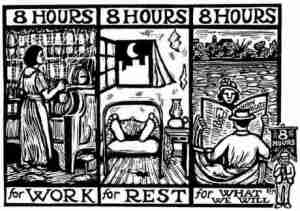 Let us learn from our past struggles, in the USA and in Malaysia. May Day should be an occasion to reflect not jubilate, to engage not agonize, to demand not relent, and to organise, not complain. We need systemic change that can guarantee equality, fraternity, self-management and socialisation of the commonwealth, guided by a bottom–up approach to decision making. We need a labour movement that is multicultural and international, feminist, active in urban and rural struggles, and that prizes reason over superstition, justice over hierarchy, self-management over state power, international solidarity over nationalism. We need to fight for a universal human community, not parochialism and separatism. The organisational power and strategic location of the Malaysian union movement provides an excellent point of departure for building this counter-movement. This is our appeal and message as we celebrate this May Day, on the eve of dark days in which the storm clouds gather over humanity – but in which the light of hope of a better future can break through, if we arm ourselves with the correct ideas and approaches. May Day began as an example of globalisation-from-below. Let us rally to it. Let us take back its original vision: liberty, equality, unity.
 I-Syndicalism uhlelo oluzama ukwehluka kunezihlelo ezejwayelekile zokuphatha nemibuso, ngamanye amazwi i-capitalism nohhulumeni. Ekuqadeni uhlelo lwe-capitalism ubukhomanisi badala into esabeka kakhulu ngokubeka amandla omnotho ezandlani zikehhulumeni kuphela. I-Syndicalistm ishiya emuva zonke izinhlelo zokuphatha esezidale ukucindezelwa noku xhashazwa komuntu ngomunye umuntu futhi. I-syndicalism ibuye izame ukwakha inhlangano eyakhiwe phezu kwezidingo zabantu hhayi izifiso zeziphathimandla futhi eyakhiwe phezu kokubambisana kwabantu abazibusayo, abalinganayo okubhekele ekutheni izidingo zika wonke wonke zifezeke, hhayi zabasezikhundleni.
 Trade unions have played a major role in defending workers’ rights against the bosses and politicians, also in advancing workers’ interests. This is why, even today, workers are still loyal to their unions. However, there are obstacles within the unions – one being the union bureaucracy, of paid and full-time officials. This can develop its own interests, undermining the unions.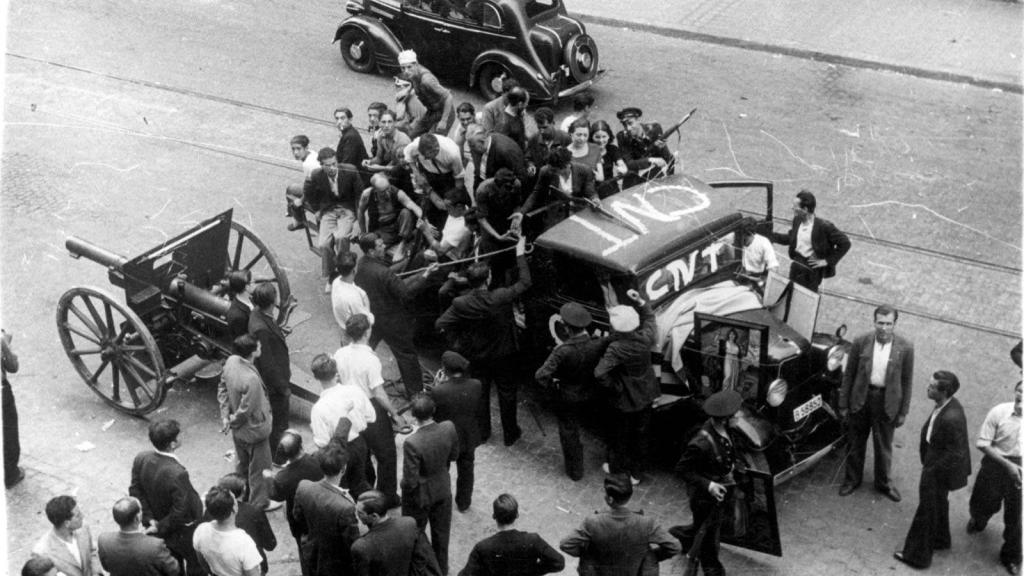
 zabalaza.net