Build a Better Workers’ Movement: learning from South Africa’s 2010 mass strike

Lucien van der Walt and Ian Bekker

The biggest single strike since the 1994 parliamentary transition in South Africa showed the unions’ power. It won some wage gains, but it threw away some precious opportunities. We need to celebrate the strike, while learning some lessons:

  • the need for more union democracy
  • the need to use strikes to link workers and communities
  • the need for working class autonomy
  • the need to act outside and against the state
  • the need to review our positions: against the Tripartite Alliance, for anarcho-syndicalism

Continue reading

An interview by Organização Anarquista Socialismo Libertário (Sao Paulo, Brazil) with Jonathan P. and Warren McGregor, two militants from the Zabalaza Anarchist Communist Front (ZACF)

ZACF logoby Organização Anarquista Socialismo Libertario (São Paulo, Brazil)

OASL: Could you briefly describe what the ZACF is, and what model of organisation you chose to enact?

ZACF: The Zabalaza Anarchist Communist Front , ZACF or just Zabalaza (which means “struggle” in the African languages of isiXosa and isiZulu), is a specific anarchist organisation, or a political organisation. The ZACF identifies with the platformist tradition within anarchism, or in Latin American terms, with Especifismo.

Zabalaza is a unitary organization, with membership open only to committed anarchist communists, who agree with our goals and principles, and are able to show them in practice.

As an organization that identifies itself with the platform, while recognizing its limitations and weaknesses, we demand a certain level of theoretical and strategic unity and collective responsibility. This is mainly due to our own experience, when we discovered that a smaller but  more firmly united organization, with a greater level of strategic and theoretical unity and collective responsibility, can achieve much more than a large organization with very little common understanding of its goals and objectives, little strategic and tactical unity, and therefore little collective responsibility.

This is how we understand the distinction between the specific anarchist organization, an organization open only to militants of a particular tendency within anarchism, and the organization of synthesis, bringing together those who identify themselves as anarchist, even if their interpretations of anarchism is completely different, even opposed.

Continue reading

Especifismo in Brazil: An Interview with the Anarchist Federation of Rio de Janeiro (FARJ)

FARJ FlagIn this interview, realised between August and October 2010, the Anarchist Federation of Rio de Janeiro (Federação Anarquista do Rio de Janeiro – FARJ) talks about its understanding of concepts such as especifismo, organisational dualism, social insertion and the role of the anarchist political organisation in relation to social movements and the class struggle.

It also deals with the recent entry of the FARJ into the Forum of Organised Anarchism (Fórum do Anarquismo Organisado – FAO) and the social effects of Rio de Janeiro being selected as a FIFA 2014 Host City, as well as sometimes difficult questions, such as finding a balance between necessary levels of theoretical and strategic unity, and the need to grow as an organisation.

  • This text can be downloaded as a PDF pamphlet here

Continue reading

Counterpower, Participatory Democracy, Revolutionary Defence: Debating Black Flame, Revolutionary Anarchism and Historical Marxism

by Lucien van der Walt

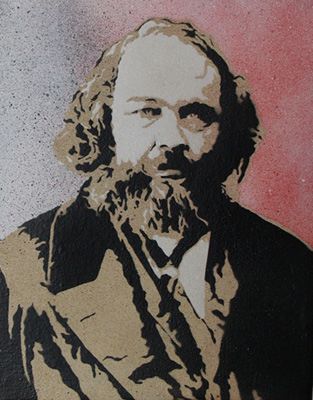
Our good mate Bakunin

This article responds to criticisms of the broad anarchist tradition in International Socialism, an International Socialist Tendency (IST) journal.[1] I will discuss topics such as the use of sources, defending revolutions and freedom, the Spanish anarchists, anarchism and democracy, the historical role of Marxism, and the Russian Revolution.

The articles I am engaging with are marked by commendable goodwill; I strive for the same. Paul Blackledge’s article rejects “caricatured non-debate”.[2] Ian Birchall stresses that “lines between anarchism and Marxism are often blurred”.[3] Leo Zeilig praises Michael Schmidt’s and my book,Black Flame: the Revolutionary Class Politics of Anarchism and Syndicalism, as “a fascinating account”.[4]

Continue reading

Take Back What’s Yours: the Mine-Line Occupation

by Shawn Hattingh (ZACF)

Forward to Worker Control

The economic crisis in South Africa has seen inequalities, and the forced misery of the working class, grow. While the rich and politicians have continued to flaunt their ill-gotten wealth, workers and the poor have been forced to suffer. It is in this context that the majority of the leaders of the largest trade unions have, unfortunately, elected to once again place their faith in a social dialogue and partnerships with big business and the state [2]. So while the state and bosses have been on the offensive against workers and the poor, union officials have been appealing to them to save jobs during the crisis. Not surprisingly, this strategy has largely failed. While union leaders and technocrats have been debating about the policies that should or should not be taken to overcome the crisis, bosses and the state have retrenched over 1 million workers in a bid to increase profits [3]. It is, therefore, sheer folly for union leaders to believe that the state and bosses are interested in compromise – without being forced into it. As seen by their actions, the elite are only interested in maintaining their power, wealth and lifestyles by making the workers and the poor pay for the crisis. For the elite, social dialogue is simply a tool to tie the unions up and limit their real strength – direct action by members. In fact, even before the crisis, social dialogue had been a disaster for the unions contributing towards their bureaucratisation and having abysmal results in terms of them trying to influence the state away from its pro-rich macro-economic policies [4].

Continue reading

The Kronstadt Rebellion: Still Significant 90 Years On

Over the last few years, many on the left have been trying to formulate a vision of socialism based on democracy. As a consequence countless papers and talks have been produced internationally about how socialism needs to be participatory if true freedom is to be achieved. Some have given this search for a form of democratic socialism evocative names, such as ‘Twenty-First Century socialism’, ‘socialism-from-below’ and ‘ecosocialism’. In South Africa the desire for a democratic socialism has also inspired initiatives such as the Conference for a Democratic Left (CDL); while even the South African Communist Party has outlined a need for a more participatory socialist agenda.

  • This text can be downloaded as a PDF pamphlet here

Continue reading